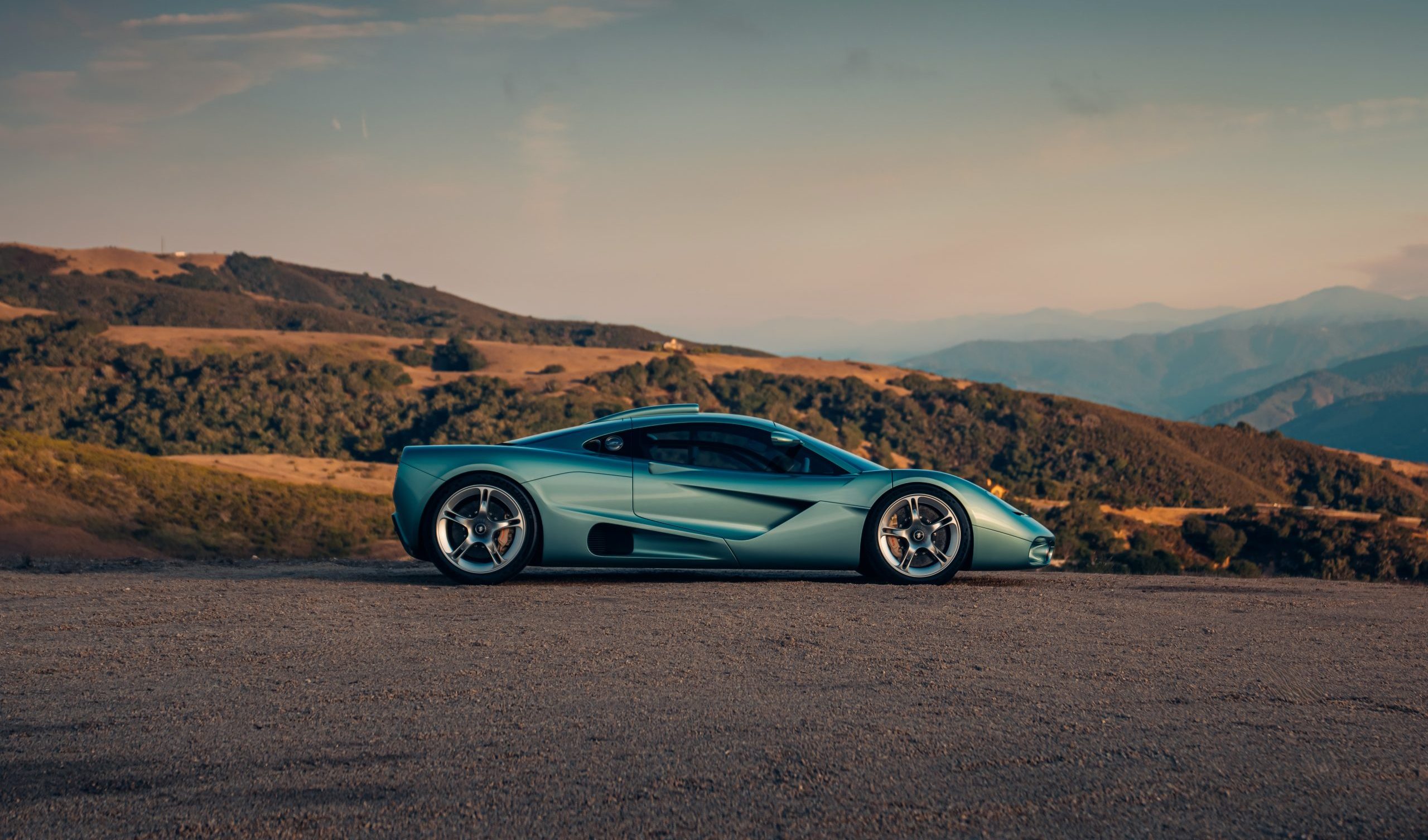
Gordon Murray conceived the McLaren F1 in the late 1980s around three priorities: a central driving position, minimal weight and a naturally aspirated V12. More than three decades later, the Gordon Murray S1 revisits that philosophy with a different brief. Where the F1 pursued maximum driver involvement, the S1 adds the comfort required for extended journeys. Revealed during Monterey Car Week in August 2026, the S1 is limited to 64 examples, all allocated before its public unveiling. The S1 belongs to a body of work in which extreme performance and usability are complementary expressions of the same approach to design.

Two Pairs of Cars
The McLaren F1 established the principles that continue to inform Murray’s work. Its carbon-fibre monocoque, central driving position and naturally aspirated BMW V12 represented a radical interpretation of the road car, prioritising low mass, mechanical response and driver involvement. In 1998, the F1 reached 240.1 mph, establishing a benchmark for naturally aspirated production cars that remains significant today.
Murray has since developed a recurring distinction between maximum performance and the demands of road use. The T.50, introduced in 2020, is the more extreme interpretation: a three-seat supercar with a rear-mounted fan and a 3.9-litre V12 capable of 12,100 rpm. The T.33, revealed two years later, takes a more restrained approach. Its two-seat configuration, absence of the fan system and revised calibration place greater emphasis on conventional road driving and grand touring.
The S1 and S1 LM extend that thinking. Produced in a run of five, the LM is a track-focused tribute to the McLaren F1 GTR’s victory at Le Mans in 1995. The S1 retains the LM’s fundamental architecture while reworking its character for the road, making it a separate interpretation of the same engineering proposition. Murray has described the intended experience as driving from Los Angeles to Monterey in comfort, while still enjoying every gearshift.

Design and Aerodynamics
The most visible changes concern the bodywork. The S1 dispenses with the LM’s fixed rear wing, extended front splitter and deep side skirts, replacing their overt aerodynamic aggression with cleaner surfaces and an integrated active rear aerodynamic system. Every exterior panel except the roof is new, although the underlying proportions remain recognisably those of the LM.
The revised aerodynamic package prioritises high-speed stability, braking support and balanced road behaviour over maximum downforce. Mechanical grip and chassis composure consequently assume greater importance, while the active system provides aerodynamic assistance without dominating the design.
The auxiliary lights set low in the front intake and the lightweight wheels draw on the McLaren F1 show car unveiled in Monaco in 1992. The lights never reached production on the F1, so their return here is a specific historical reference. A-pillar-mounted mirrors and a discreet rear-view camera further distinguish the S1 from the LM, while the daytime running lamps are integrated within the headlight clusters, preserving the continuity of the front-end design.
Murray has described the intention as revealing the beauty and purity of the LM’s form by removing its most extreme aerodynamic elements. The result is a car whose visual restraint is supported by a clear engineering rationale.
Engine and Gearbox
At its centre is a 4.2-litre Cosworth V12 producing up to 681 bhp (690 PS) and approximately 500 Nm of torque. Capacity falls from the LM’s 4.3 litres, but the engine keeps the same 12,100 rpm rev limit. More significant on the road is the revised torque delivery: more than 80 per cent of peak torque is available from 2,500 rpm, broadening the engine’s usefulness beyond the upper reaches of its operating range.
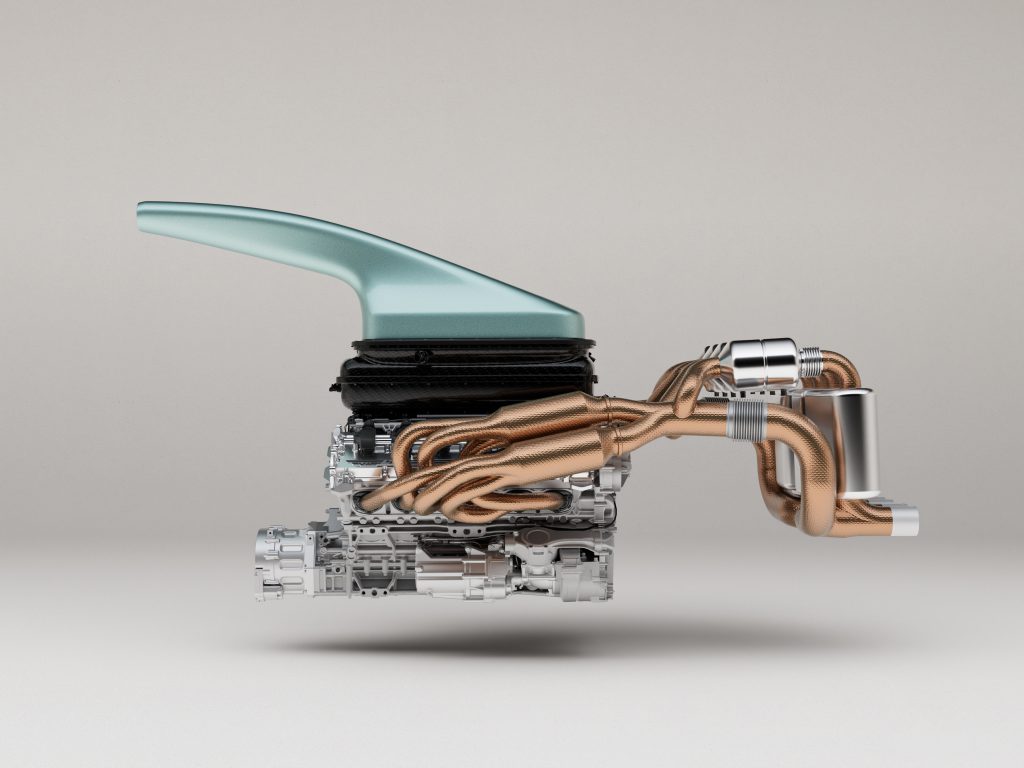
Titanium valves and connecting rods, silicon-carbide-coated pistons and dry-sump lubrication preserve the engine’s competition-derived specification. The objective is a wider operating range without surrendering the immediacy and high-revving character that distinguish Murray’s V12s.
The figures place the engine within a broader historical context. The T.50’s 3.9-litre V12 develops 654 bhp and 467 Nm, while the McLaren F1’s 6.1-litre BMW V12 produced approximately 618 bhp and 650 Nm. The S1 delivers greater peak power than either, from a considerably smaller displacement than the original F1. Its lower torque figure relative to the BMW engine illustrates a different approach: extracting performance through engine speed and specific output rather than displacement alone.
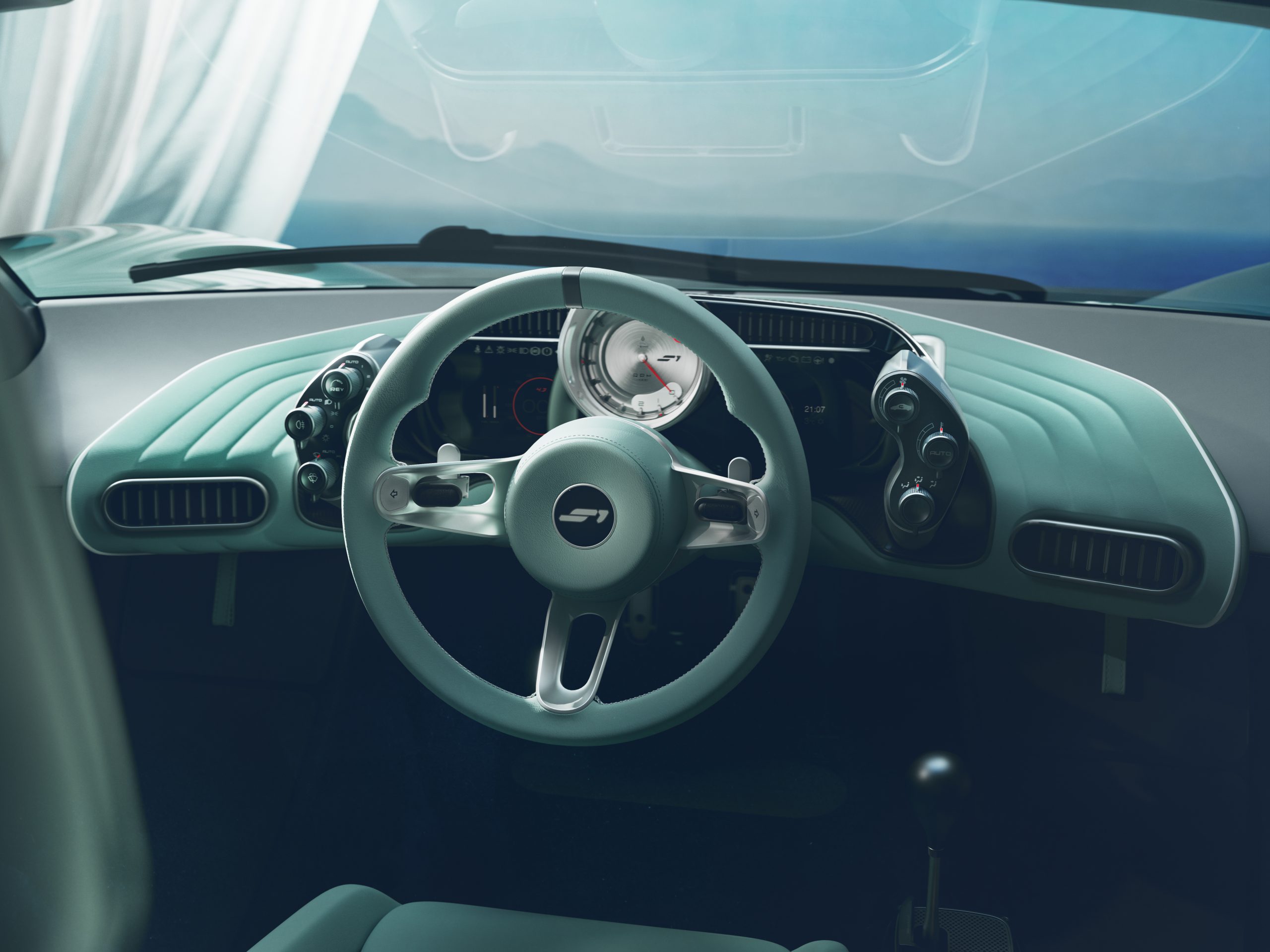
Power is transmitted through a six-speed manual gearbox, with a taller sixth gear for sustained cruising. Revised, straighter cable routing is intended to improve shift precision. The manual transmission remains integral to the experience, preserving a direct physical relationship between driver and engine at a time when automated gearboxes dominate much of the high-performance market.
The result is a powertrain designed to operate across two distinct registers: relaxed progress on a long journey and the precision of a naturally aspirated V12 when the road allows it to be fully exercised.
Chassis, Weight and Interior
The carbon-fibre monocoque, basic suspension architecture, track widths and tyre sizes are carried over from the S1 LM. Ride height increases by 10 mm, while revised damping introduces greater compliance on uneven roads. Selectable power steering allows the driver to choose lighter assistance for relaxed progress or a more direct response on demanding roads.
The manufacturer has stated a target weight below that of the T.50, despite the S1’s additional equipment. The figure remains a target rather than a confirmed kerb weight, but it keeps the S1 in line with the marque’s longstanding emphasis on low mass.
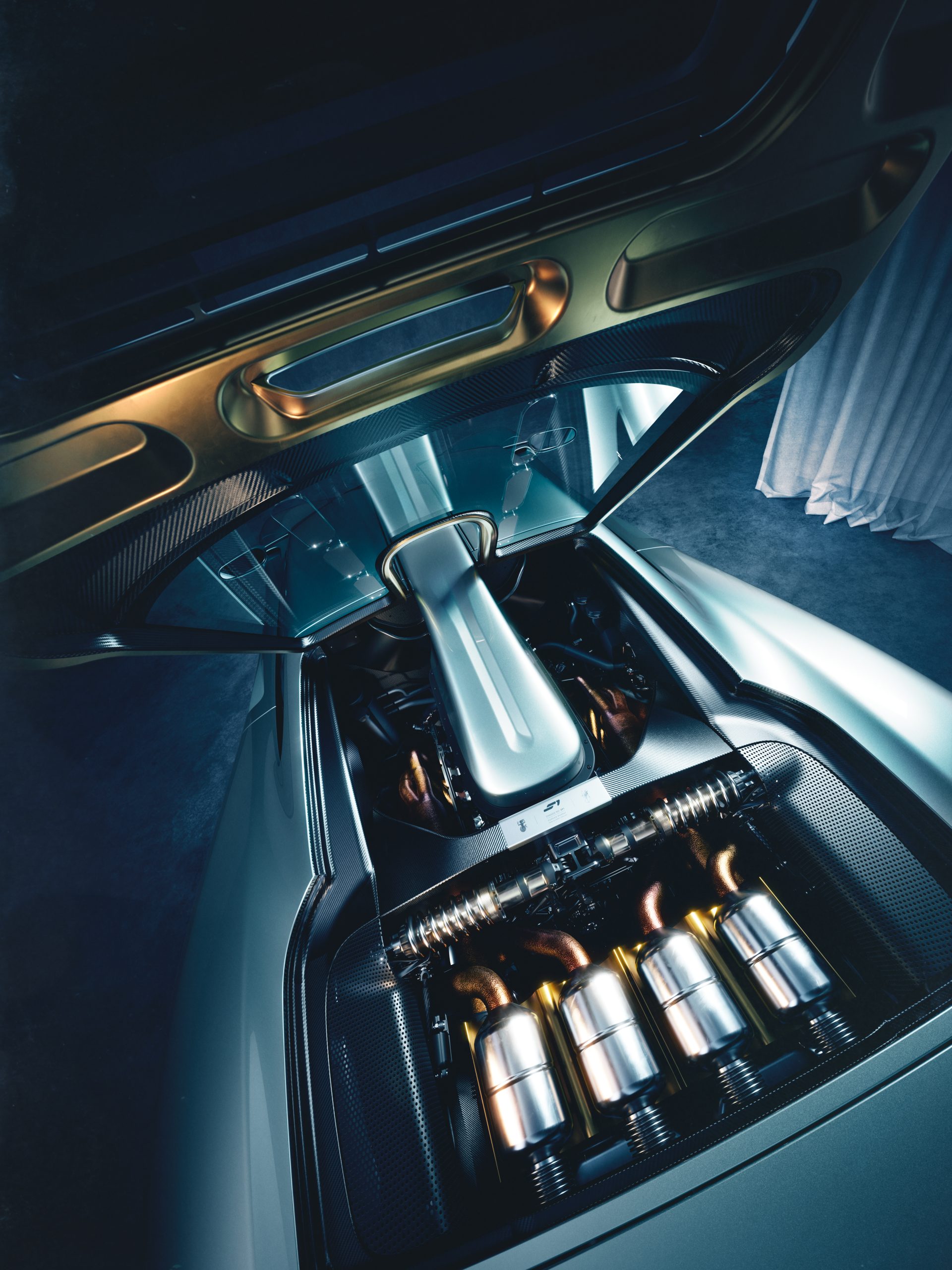
Material choices reinforce the relationship between engineering and presentation. A 24-carat gold-plated heat shield and polished Inconel exhaust provide a visual focus for the V12 installation, but the gold also serves a practical purpose. The McLaren F1 used approximately 16 grams of gold foil in its engine bay to reflect heat and protect the surrounding carbon-fibre structure. The S1 revisits that solution, turning a functional material into a defining detail of the engine compartment.
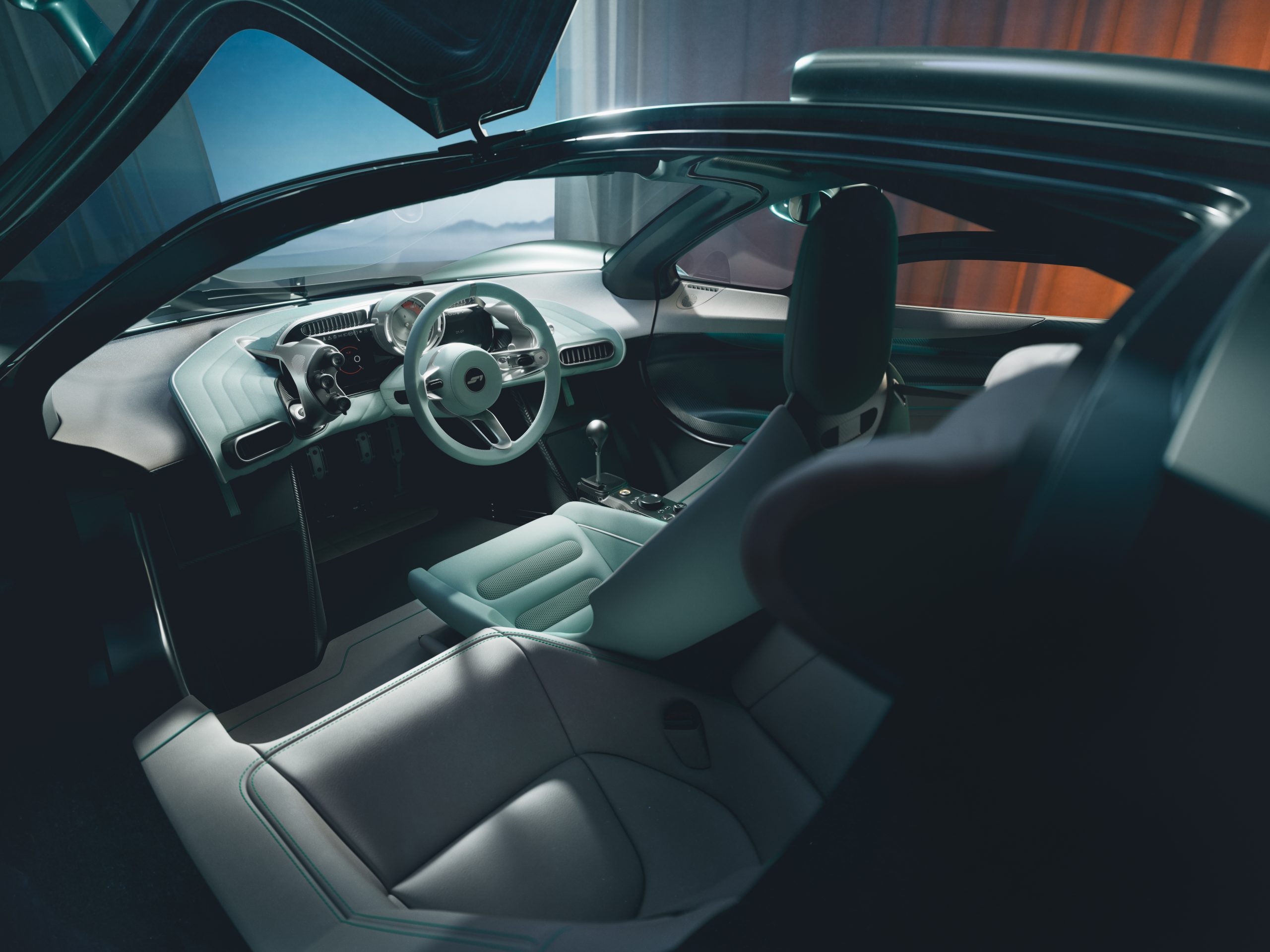
Inside, the central driving position remains the organising principle, with passenger seats positioned on either side. The cabin introduces premium leather, tailored fabrics, additional acoustic insulation, revised infotainment screens and a lightweight audio system. These additions support the car’s touring brief without displacing the mechanical focus of the driving environment.
The dihedral doors now incorporate conventional drop-down windows, improving access and everyday practicality. It is a practical refinement, consistent with the S1’s wider purpose: making a track-derived engineering concept better suited to the realities of road use.

Market Insights
Murray’s recent production models provide context for the S1’s position within the collector-car market. The T.50 launched at £2.36 million (approximately $3 million), while the T.33 was priced from £1.37 million ($1.85 million), both before taxes. Each was limited to 100 examples. The T.50 sold out in around 48 hours and the T.33 in approximately a week.
The S1 LM offers a further reference point. Its first example sold at RM Sotheby’s in Las Vegas in November 2025 for approximately £15.8 million ($20.63 million), which Gordon Murray Special Vehicles described as a record for a new car sold at auction, excluding charity sales. The car had not yet been built, and its buyer was to work directly with Murray on the final specification.
The result demonstrates the market’s appetite for scarcity, provenance and direct involvement with a respected designer. It is not, however, a benchmark for the S1’s market value. The LM’s five-car production run, competition-derived character and the circumstances of the sale place it in a distinct category.
With 64 examples, the S1 occupies a different position within Murray’s range. It is rarer than the T.50 and T.33 but likely to appeal to owners whose priorities extend beyond outright exclusivity. Its appeal rests on the combination of limited production, technical pedigree and a more usable interpretation of the same underlying engineering philosophy.
As with any low-volume specialist car, the S1’s investment potential will depend on demand, provenance, condition and the wider collector-car climate. Servicing, storage and transport also represent significant ownership considerations. With the original allocation complete, any future purchase will come through the secondary market, where documented history and the quality of an individual car’s specification will matter.

The Case for the S1
The S1 is best understood as a continuation of Gordon Murray’s central argument about the performance car: technical sophistication should serve the driving experience, rather than overwhelm it. The naturally aspirated V12, manual gearbox and central driving position are not isolated gestures towards nostalgia. They are elements of a coherent engineering philosophy, refined for a different generation of road use.
Its connection to the S1 LM provides a competition-derived foundation, while the revised aerodynamics, more compliant chassis and touring-focused cabin give it a character of its own. References to Murray’s earlier work add historical depth without making the car dependent on heritage alone.
Its performance is rooted in engine response and low mass. The result is a modern car in which the driver remains central. Rather than recreating the past, the S1 carries the principles behind Murray’s earlier cars into long-distance driving.

Continue Reading on Gordon Murray’s McLaren F1: A Supercar Ahead of Time