
Michelangelo Buonarroti learned early that talent alone did not protect him from rivalry. As a teenager in Florence, he had his nose broken in a fight with another student, leaving it permanently flattened. At the time, he was training within the household of Lorenzo de’ Medici, who had established an informal sculpture school in his garden using a collection of classical antiquities. There, students worked directly from Roman and Greek statuary while competing for recognition within one of the most influential patronage networks in Italy. That environment shaped not only Michelangelo’s artistic development but also the trajectory of his works, many of which are now housed in museums and churches.

Born in 1475 in Caprese, Michelangelo was raised in Florence in a family of minor noble origins determined to preserve its social standing despite declining fortunes. His father viewed workshop training as beneath the family’s status and resisted his decision to pursue art. Despite his father’s objections, at thirteen Michelangelo entered the workshop of the painter Domenico Ghirlandaio, where he began his formal artistic training.
Two Trainings, One Method
Ghirlandaio’s workshop introduced Michelangelo to the discipline of fresco: planning compositions in sections, transferring designs onto wet plaster, and working within the limits of a surface that dried quickly. He later downplayed the importance of this apprenticeship, but its lessons remained with him, visible decades later in the way he approached the Sistine Chapel ceiling as a structural challenge as much as a painted one.
The Medici sculpture garden shaped him more profoundly. Lorenzo de’ Medici recognised the young artist’s ability and brought him into his household, where Michelangelo encountered poets, philosophers, and a collection of classical sculpture. In that environment, he formed the artistic conviction that would define his work in stone: that the figure already existed within the marble, and that the sculptor’s task was to reveal it.
In that environment, he embraced the idea that each block of marble contained a figure waiting to be revealed by the sculptor. Works such as The Battle of the Centaurs and the Madonna of the Stairs, created while he was still a teenager, explore this idea through tightly packed forms and the energy of intertwined bodies.


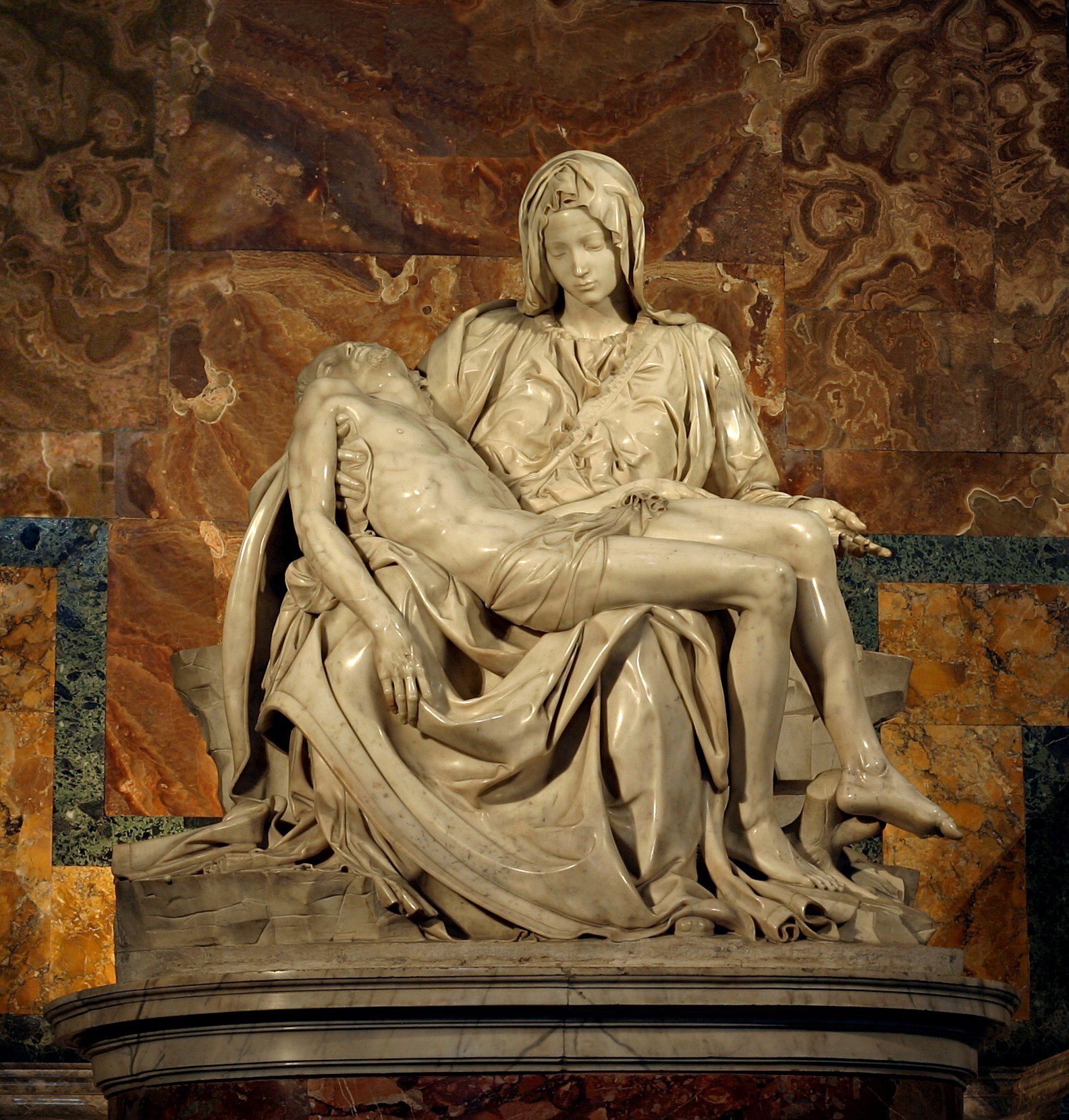
Lorenzo’s death in 1492 abruptly ended that arrangement, and Michelangelo left Florence for the first time, without the protection of the Medici household and uncertain of his next source of support. Rome provided the next opportunity: in the late 1490s, he carved the Pietà for the French cardinal Jean de Bilhères. Its polished surface and controlled beauty marked a departure from the dense, compressed reliefs he had produced as a teenager in Florence, revealing a new command of marble and the human figure.
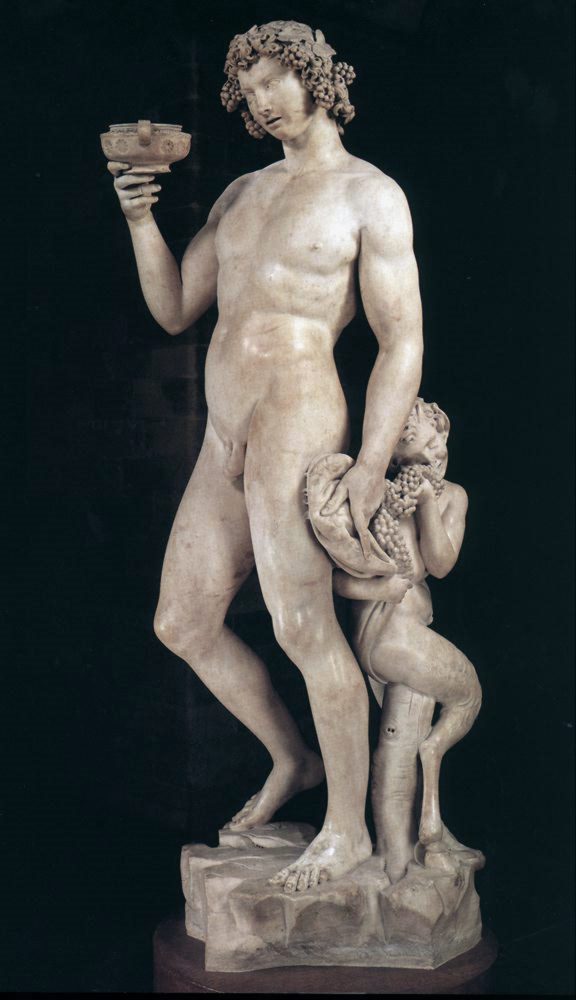
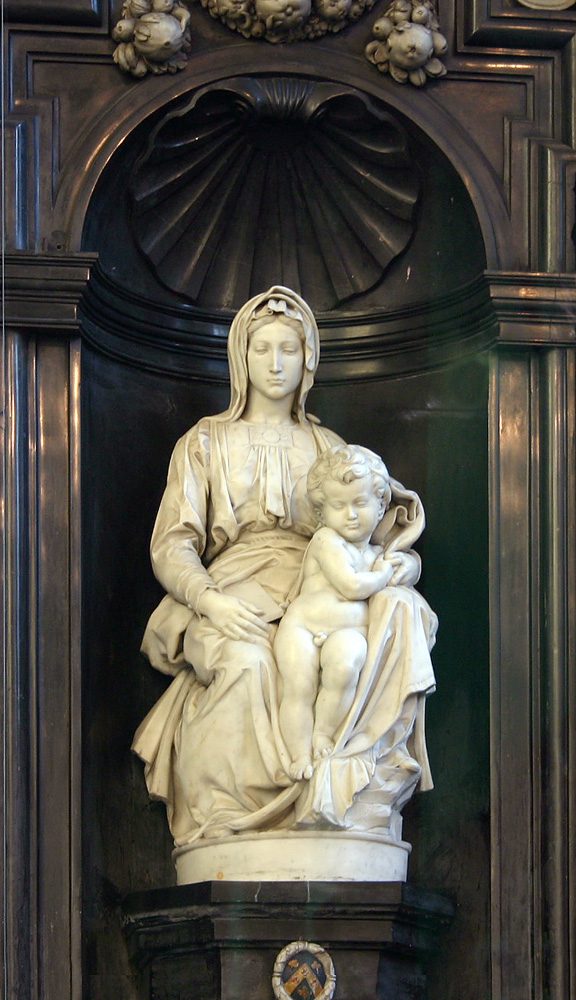
Around the same period, he sculpted Bacchus, a deliberately unstable interpretation of a classical figure that demonstrated his ability to move beyond devotional subjects and engage with pagan antiquity. The Bruges Madonna, sent to Flanders soon afterwards, extended his reputation beyond Italy and showed that his religious sculpture could command attention far beyond the circles in which it was made.
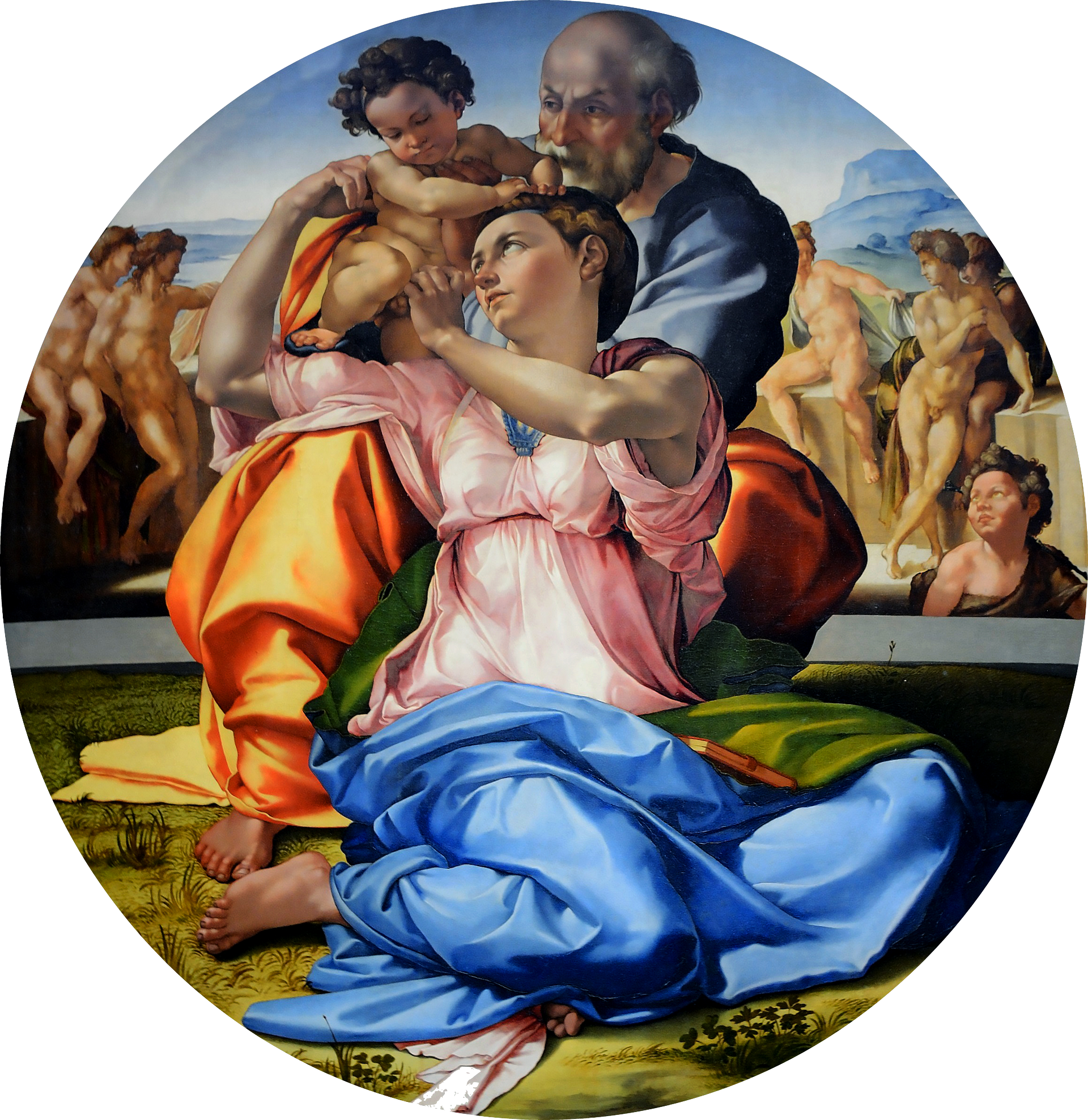
He returned to Florence at the turn of the century, aged twenty-six, to take on a block of marble that had stood neglected for decades, already roughed out and abandoned by two sculptors who had judged it too narrow and flawed to use. He spent two years overcoming the block’s limitations to create David, a figure captured not in action but in anticipation: tense, alert, and poised before his confrontation with Goliath. He was twenty-nine when it was unveiled outside the Palazzo Vecchio, and the city embraced it as a civic symbol as much as an artistic achievement. Around the same time, he painted the Tondo Doni, a work often overshadowed by the later Sistine Chapel ceiling but important for the way it carries his sculptural approach into painting, with figures that seem carved rather than painted.

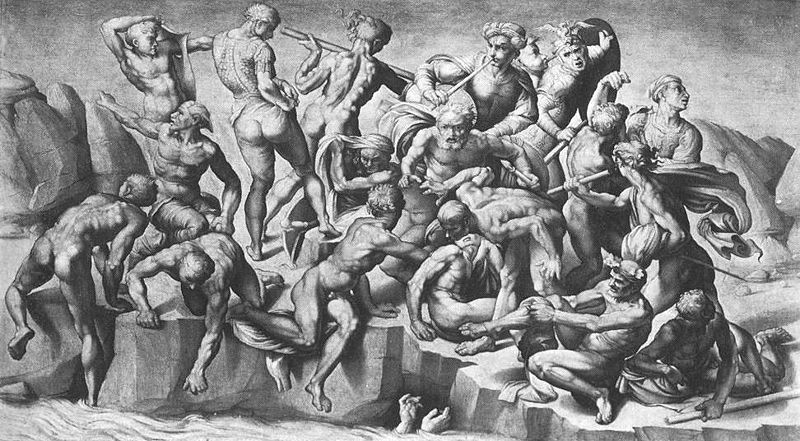
The success of David brought Michelangelo into direct competition with Leonardo da Vinci. In 1504, the two artists were commissioned to paint rival battle scenes on opposite walls of the same council hall, though neither work was completed. Leonardo criticised Michelangelo’s emphasis on the male nude, while Michelangelo reportedly responded by attacking Leonardo’s tendency to abandon commissions. The rivalry remained visible for years, but even his conflicts with other artists seemed to sharpen his discipline rather than distract from it. In this case, the unfinished commission produced some of his most influential studies: Michelangelo’s preparatory drawings for the Battle of Cascina, filled with muscular, twisting figures, became among the most influential studies of the human form, despite the fact that the fresco itself was never executed.
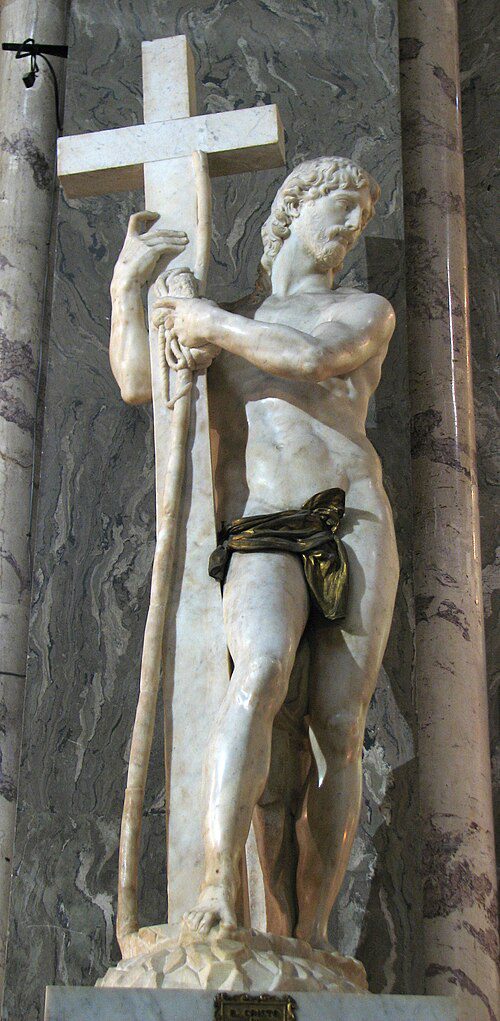
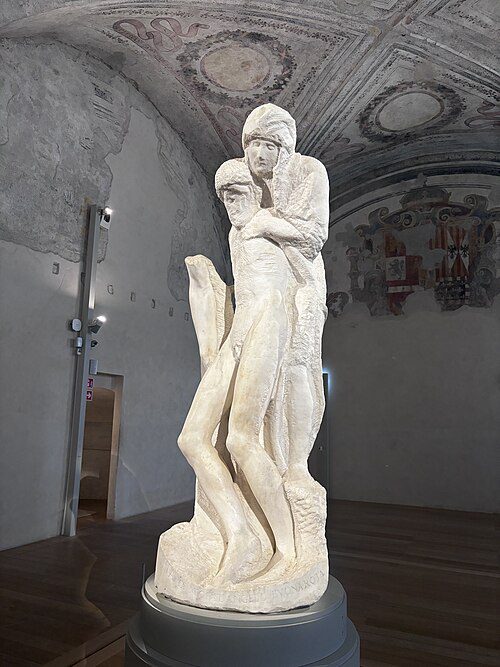
The tension between emergence and completion runs throughout Michelangelo’s work. Several of his best-known sculptures, including the Slaves carved for Julius II’s tomb and the late Rondanini Pietà, were left unfinished, with figures still appearing to emerge from the marble rather than fully separated from it. These incomplete works partly reflect a career repeatedly disrupted by competing commissions, but the unfinished surface also became an artistic choice: instead of concealing the stone’s resistance, Michelangelo allowed it to remain visible. The Christ the Redeemer (Cristo della Minerva), completed in Rome later in his career, reveals the opposite approach: a fully polished, idealised figure that shows Michelangelo treated completion itself as a choice rather than a necessity.
Rome, Power, and the Expansion of Scale
At thirty-three, already recognised as one of Italy’s leading artists, Michelangelo was summoned to Rome by Pope Julius II and given the most ambitious commission of his career: a free-standing tomb intended to hold more than forty over-life-size marble figures across three tiers, on a scale he had never attempted before. The project was repeatedly reduced, delayed and redesigned over the next four decades, remaining unfinished at his death. One of its completed figures, Moses, depicts a seated, muscular patriarch gripping the tablets of the Law and remains a defining example of Michelangelo’s ability to express controlled physical tension.

Before the tomb could be completed, Julius diverted Michelangelo to paint the Sistine Chapel ceiling, a project carried out between 1508 and 1512. He resisted the commission, insisting that he was a sculptor rather than a painter, and spent four years working on scaffolding of his own design. The ceiling functions as a unified narrative, with scenes from Genesis, prophets and sibyls arranged to be read from the chapel floor rather than examined at close range. Although The Creation of Adam has become its most widely reproduced image, it forms only one part of a much larger theological programme. A surviving study for the Libyan Sibyl reveals the degree of precision with which Michelangelo resolved the human figure on paper before transferring the design to wet plaster.


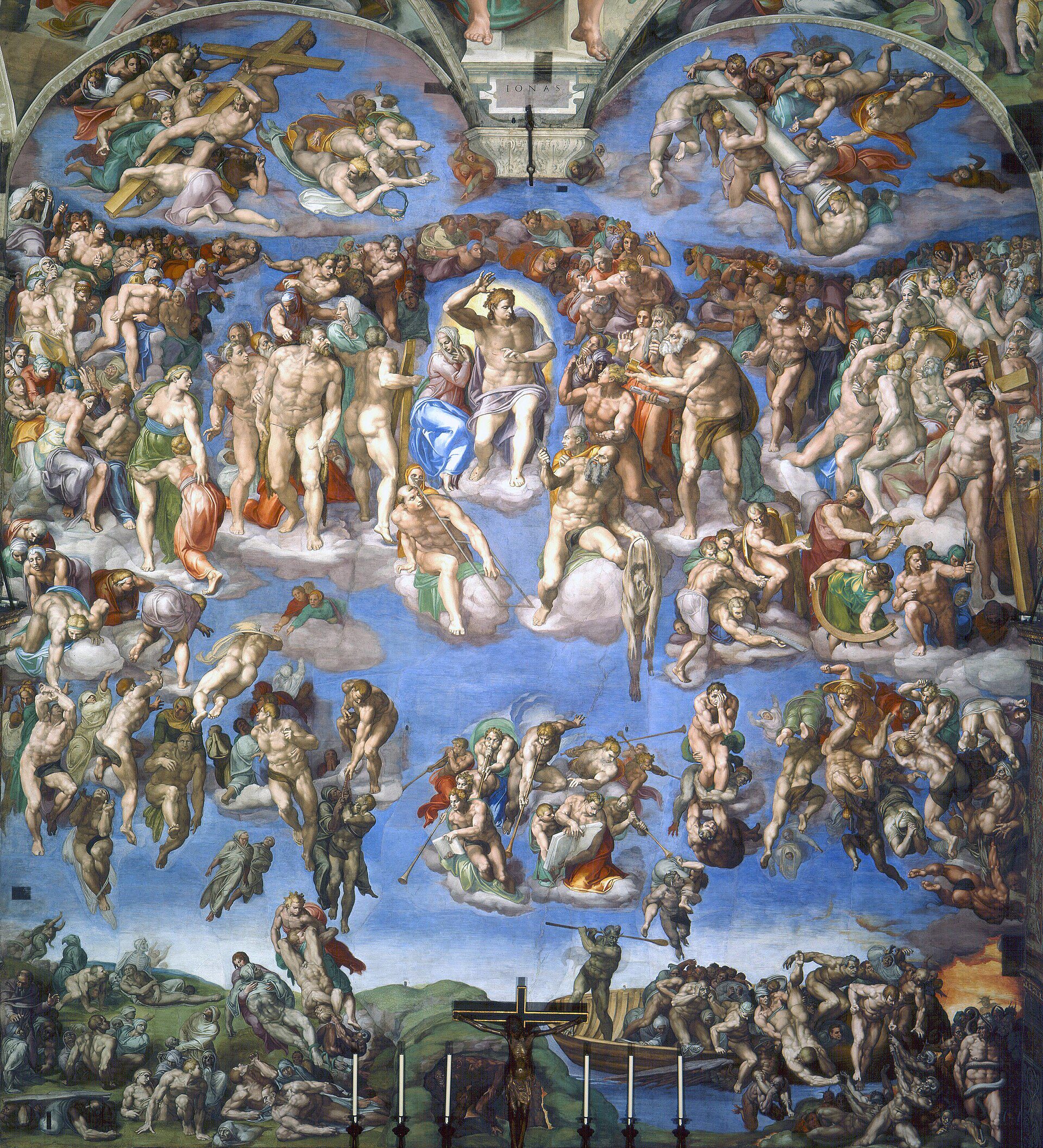
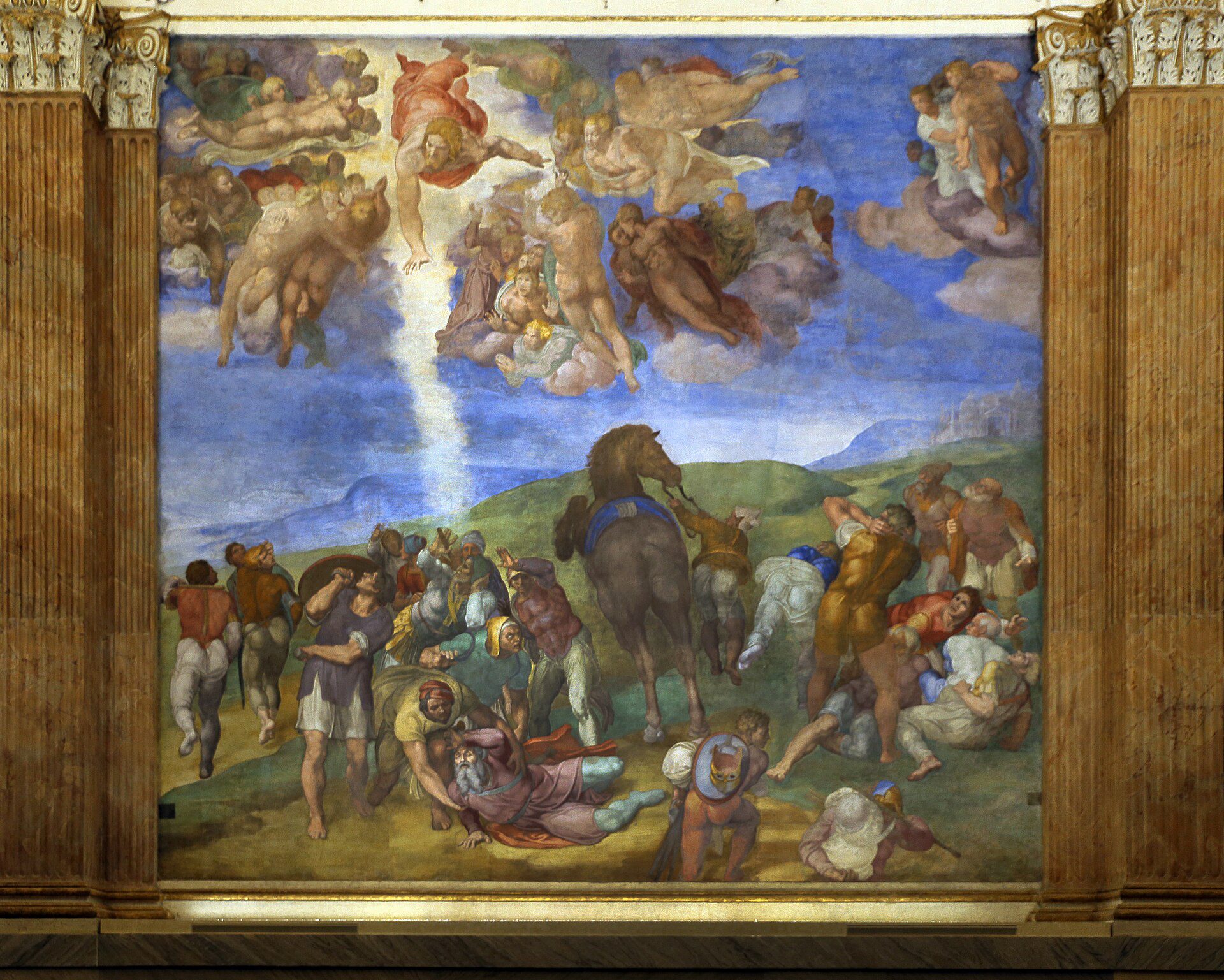
Michelangelo returned to the Sistine Chapel more than two decades later, working under Pope Paul III to paint The Last Judgment, a fresco whose crowded, unsettled composition marked a clear departure from the ceiling’s more confident vision. The years between the two commissions help explain this transformation. Rome had been sacked by imperial troops in 1527, the Counter-Reformation had begun to reshape the Church’s priorities, and Michelangelo’s own religious outlook had become more austere and introspective. In the nearby Pauline Chapel, he painted The Conversion of Saul and The Crucifixion of St Peter, two late frescoes that compress figures into turbulent, almost sculptural masses, marking the final phase of his work as a painter.

Alongside these commissions, his architectural work grew steadily more prominent. In Florence he redesigned the Laurentian Library staircase, treating architecture as a form of controlled movement.

In the Medici Chapel, he integrated sculpture and architecture into a single programme, creating Day, Night, Dawn, and Dusk, four allegorical figures that embody the central ideas of his mature sculpture: movement, tension, and the relationship between the human body and space. The seated figures of Giuliano and Lorenzo de’ Medici anchor the two tombs, their composed stillness contrasting with the restless energy of the reclining figures beneath them.
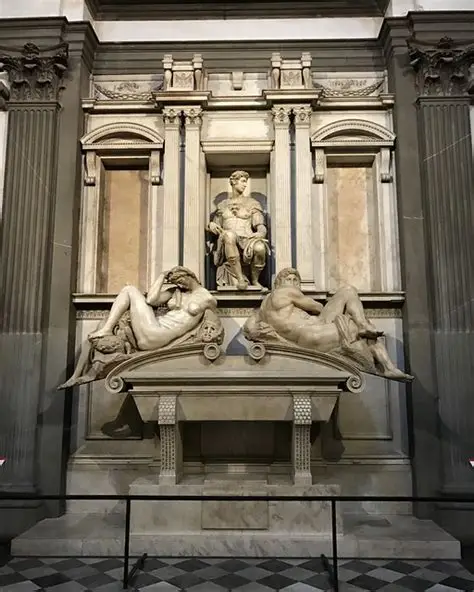
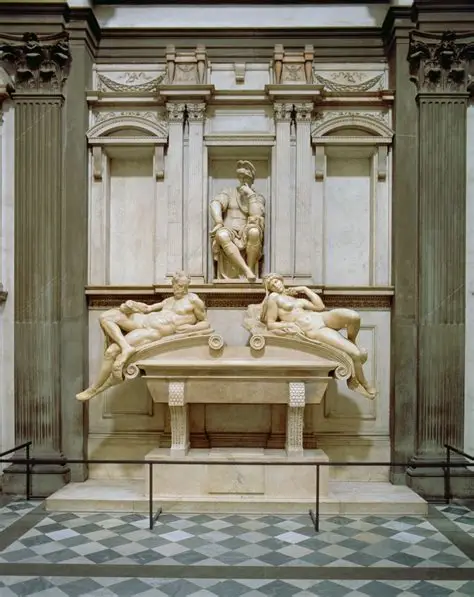
with Dusk and Dawn


Beyond the tombs, the chapel also contains architectural and devotional elements that complete the wider programme. At the altar, the Madonna and Child introduces a quieter register, providing a devotional focus within a space otherwise defined by compressed physical force. Taken together, the chapel demonstrates Michelangelo’s ability to treat sculpture, architecture and the human figure as a single artistic system, each element inseparable from the others.

The Medici Chapel was not an isolated experiment. It marked the beginning of a broader architectural role, in which Michelangelo applied his understanding of mass, movement and proportion to increasingly ambitious spaces. In Rome he worked on the Sforza Chapel, redesigned the Capitoline Hill into a unified civic space, and later took on Porta Pia, a late experiment in façade design. His appointment as chief architect of St Peter’s Basilica brought his career to its largest scale. He revised the design of the dome and oversaw the basilica’s construction during his final years.


Porta Pia — façade design in Rome
Behind the public commissions, Michelangelo’s personal life remained largely private. He wrote more than three hundred poems and sonnets, many addressed to the young Roman nobleman Tommaso de’ Cavalieri, exploring a Neoplatonic conception of beauty in which the spiritual and the erotic were closely entwined. A lasting friendship with the poet Vittoria Colonna provided one of the few sustained intellectual relationships of his later life, shaped by shared religious interests and mutual admiration.
He died in Rome in 1564 at the age of eighty-eight, having spent his final years directing the construction of St Peter’s Basilica largely without payment, believing the work to be a service to God rather than to any earthly patron. The Bandini Pietà, carved during these final years and damaged by Michelangelo himself before being reworked by others, reflects the intensity of his late style and is widely thought to contain a self-portrait in the figure of Nicodemus.

Market Insights: Scarcity, Attribution, and Institutional Weight
Michelangelo occupies a unique position in the art market because almost none of his major works are available to buy. His sculptures, frescoes and architectural commissions remain in the churches, museums and public collections for which they were created or to which they were later entrusted, including the Vatican Museums and Florence’s Galleria dell’Accademia. As a result, collectors encounter Michelangelo primarily through drawings, sketches and occasional workshop material that appear at auction.
The value of these works depends above all on attribution. Michelangelo worked within a busy workshop, and many surviving drawings occupy uncertain ground between his own hand and those of his assistants, making scholarly consensus critical. When attribution is secure, individual drawings can achieve prices in the multi-million-pound range, while workshop pieces and later copies command far lower sums. Plaster casts, engravings and other reproductions from the eighteenth and nineteenth centuries also form an established collecting category, valued for their historical significance rather than as original works by Michelangelo.
In Michelangelo’s case, the market is shaped less by trade than by custodianship. His greatest works are effectively beyond commerce, leaving scholarship, provenance and attribution to determine the value of the relatively small body of material that remains in private hands.
A Career Written Through Movement
Michelangelo’s life cannot be separated from geography, or from the teachers, patrons and popes who redirected it. Born in Tuscany, formed in Florence under Ghirlandaio and then in Lorenzo de’ Medici’s garden, and repeatedly drawn to Rome by papal commissions, his career traces the shifting centres of Renaissance power as closely as it traces his own development as an artist. His major works, from the Pietà and David to the Sistine Chapel ceiling, The Last Judgment and his architectural projects, emerged from changing commissions, locations and demands across nearly seven decades of work.
What remained consistent was his method. Across sculpture, painting and architecture, he returned to the same question: how the human body and built form could express tension, movement and restraint. That pursuit runs from his apprenticeship at thirteen to his final years overseeing work on St Peter’s Basilica, and it explains why his work continues to command attention today, not simply as a series of masterpieces but as the record of a career shaped by constant revision, interruption and ambition.
By the end of his lifetime, Michelangelo had become a figure of almost unparalleled renown. The painter and writer Giorgio Vasari recorded and elevated that reputation in his influential book Lives of the Most Excellent Painters, Sculptors, and Architects, placing Michelangelo at the summit of Renaissance art while he was still alive.


