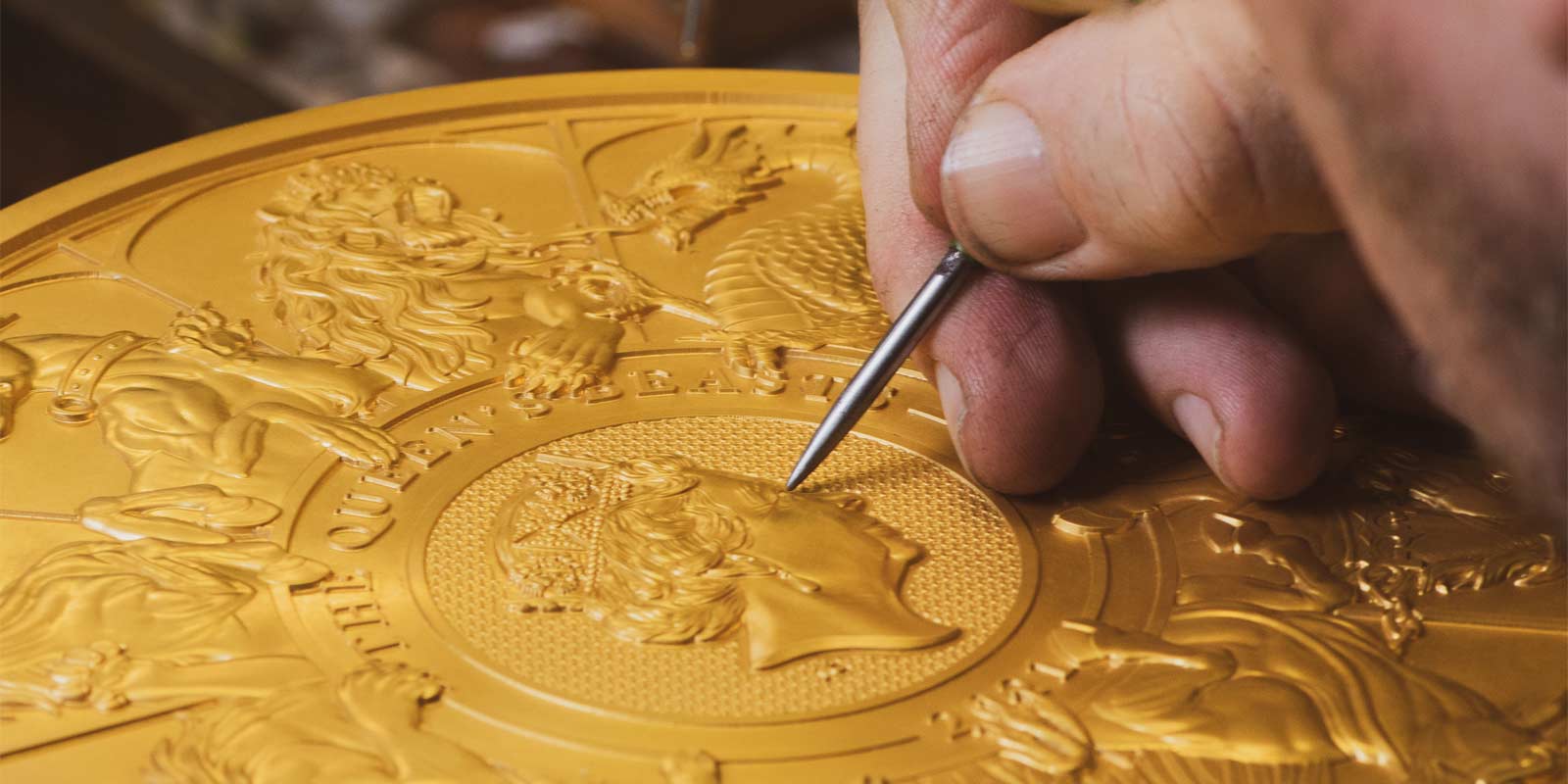
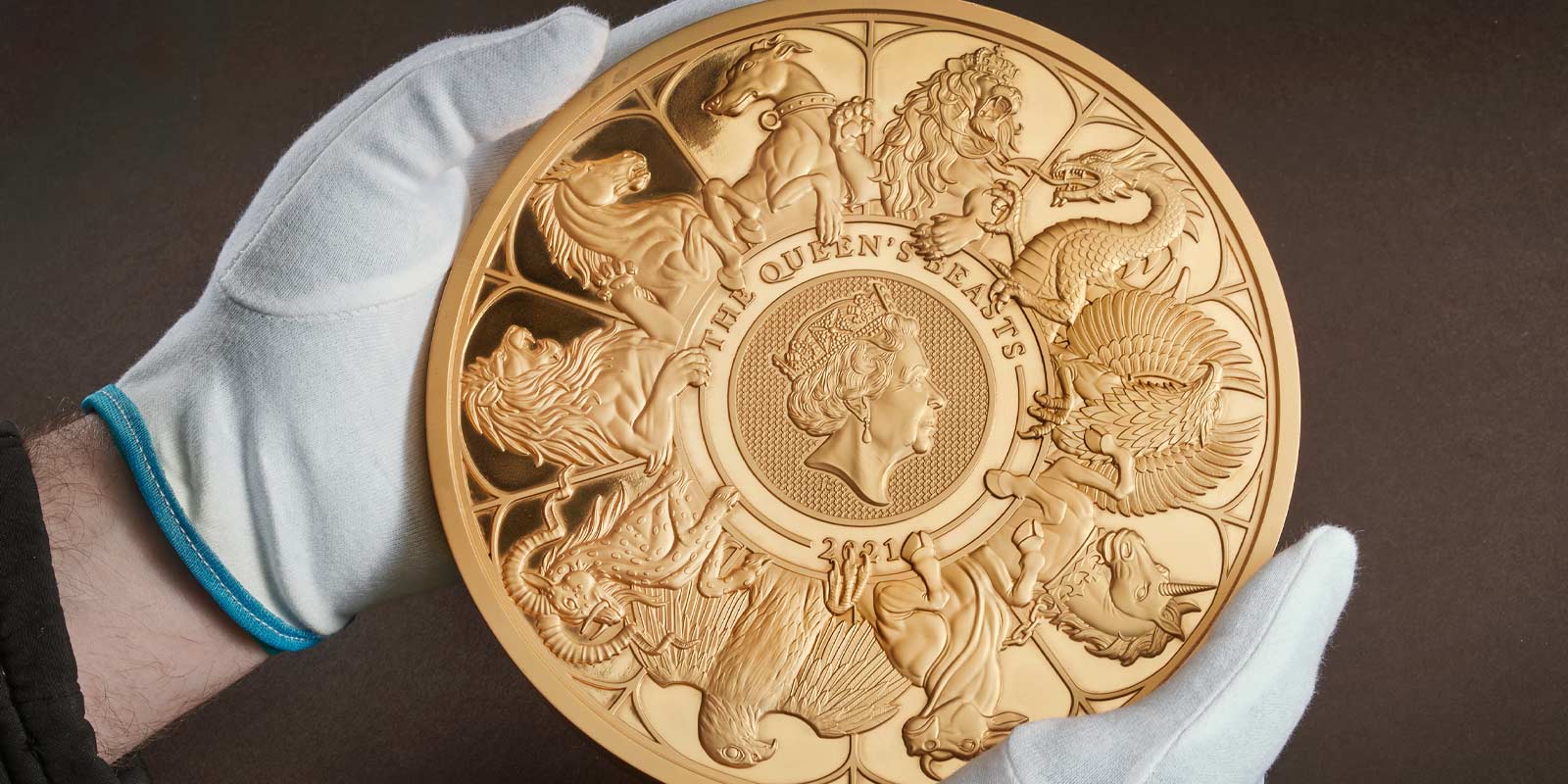
On 2 June 1953, ten carved stone figures flanked Queen Elizabeth II’s path to Westminster Abbey during her coronation, each bearing shields that traced royal lineage through centuries of British monarchy. The Queen’s Beasts, as they became known, represented more than ceremonial decoration—they documented dynastic succession through heraldic symbols. Fast-forward to 2016, and the Royal Mint transformed these historical symbols into what would become one of Britain’s most admired modern gold coin series. The collection features ten distinct beast designs. Each was issued in bullion and proof versions across a range of denominations, including 1/4 oz, 1/2 oz, and 1 oz bullion coins, with proofs available up to 5 oz. Larger limited editions were produced in 10 oz and 1 kg formats. The series includes a special 10-kilogram gold coin measuring 200mm across—a limited edition struck in fewer than ten pieces that remains the largest gold coin ever produced in the Mint’s 1,100-year history.
Heritage and Craftsmanship
The original stone beasts, sculpted by James Woodford for Queen Elizabeth II’s 1953 coronation, represented her ancestral claims through multiple royal houses. The Lion of England traced Plantagenet power, the Unicorn of Scotland marked the 1603 union of crowns, and the Red Dragon of Wales connected to ancient Celtic kingdoms. These two-metre sculptures served as heraldic markers along the coronation route.
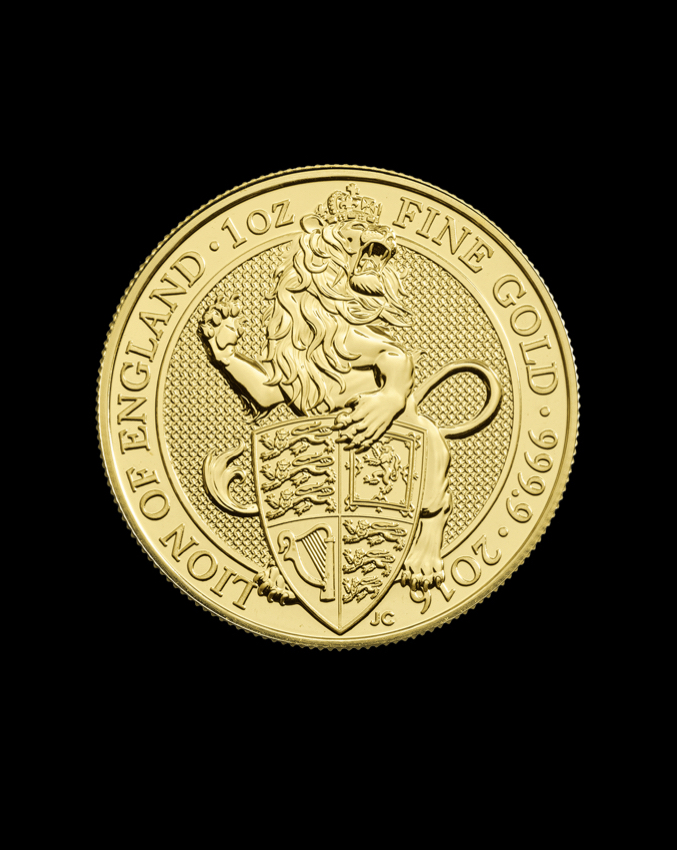
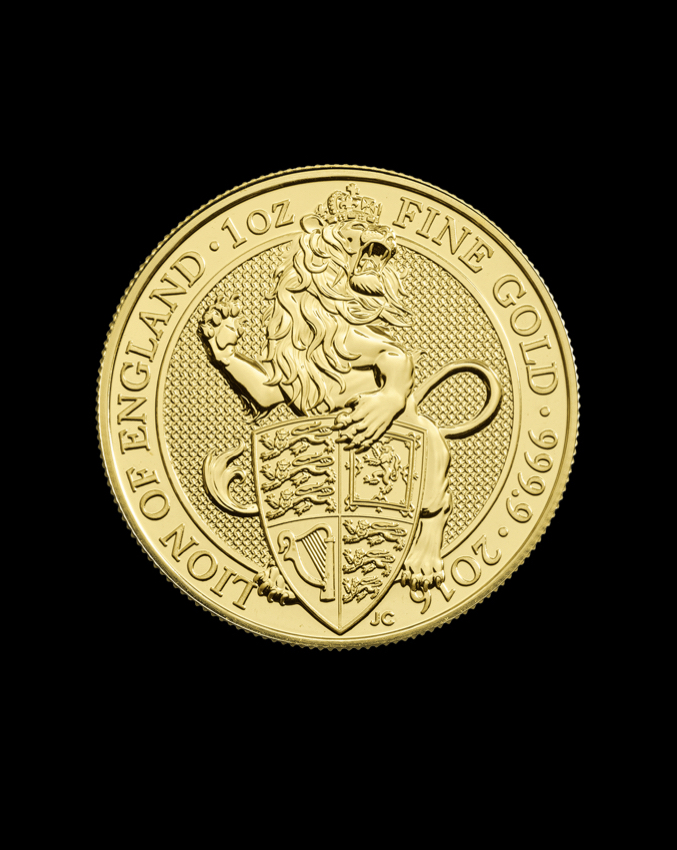
When the Royal Mint decided to translate these sculptures into coin form in 2016, the task fell to engraver Jody Clark, who had already designed the Queen’s fifth portrait on UK currency. Clark adapted Woodford’s originals for high-relief coinage, maintaining heraldic strength while refining proportions for smaller formats. The series launched with the Lion of England, depicted standing on its hind legs and clutching a quartered shield bearing the royal arms. Multiple die revisions were needed to capture the flowing mane’s detail sharply across denominations. The Lion became the series’ most popular design and sold out quickly, setting the tone for what followed.
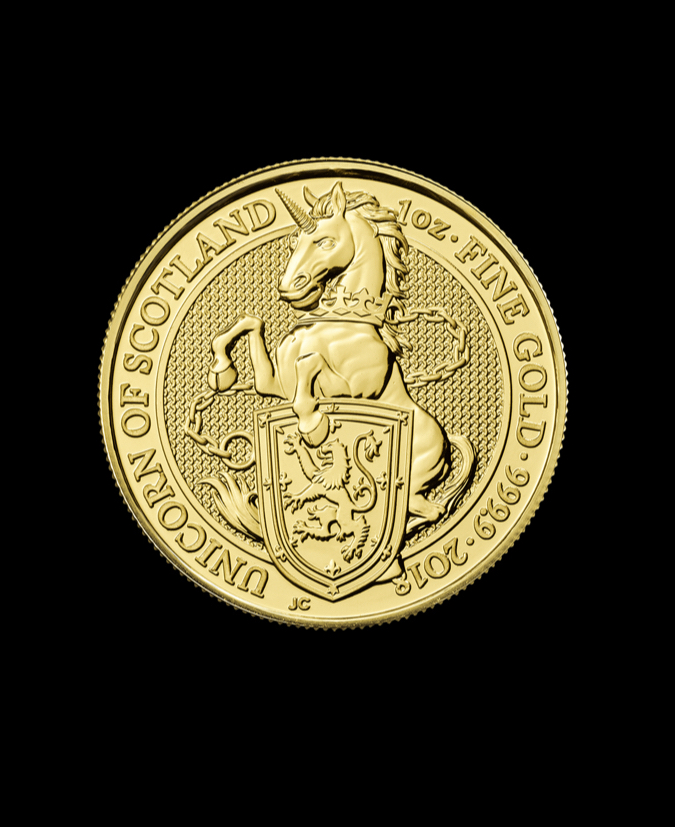
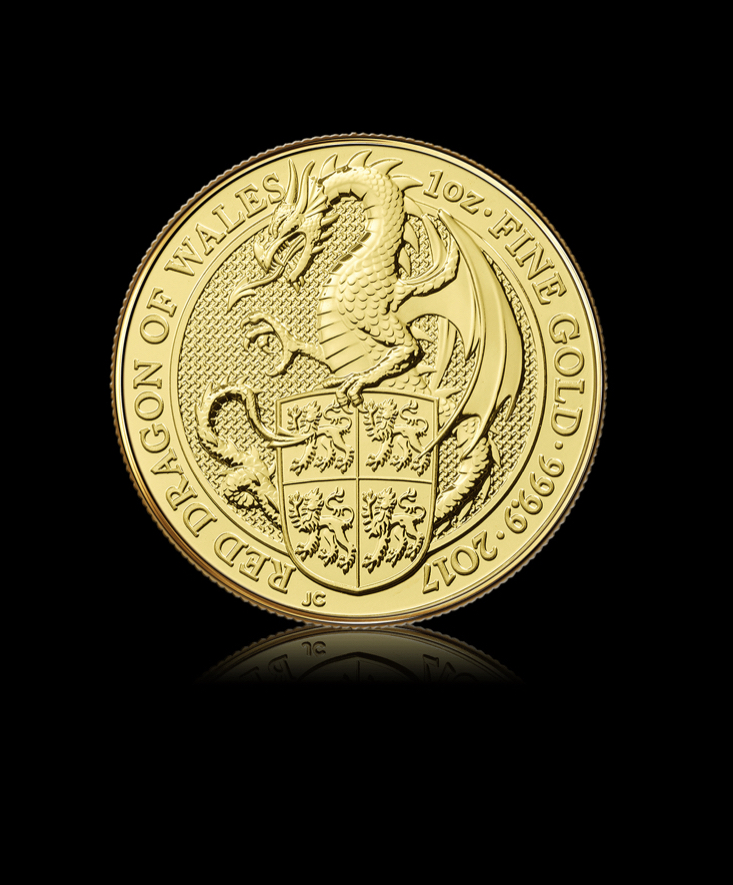
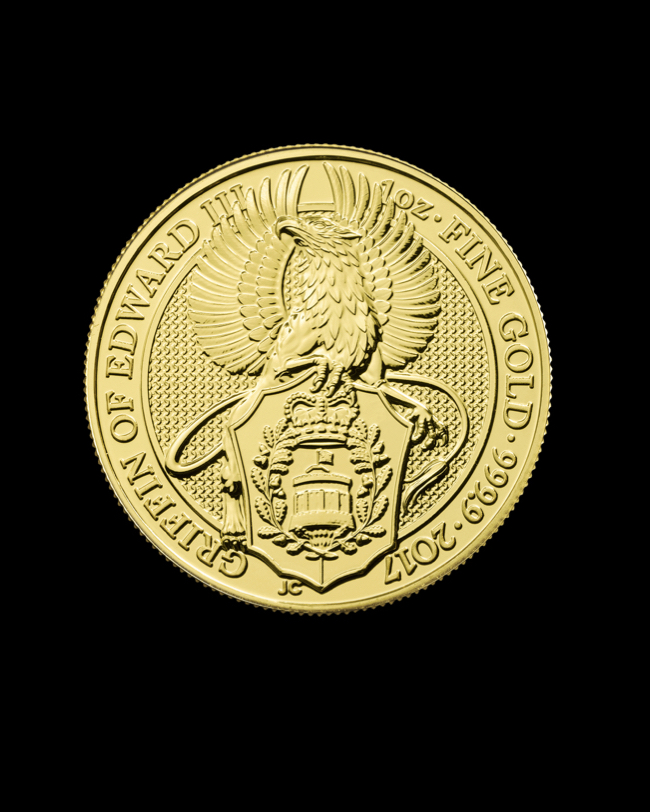
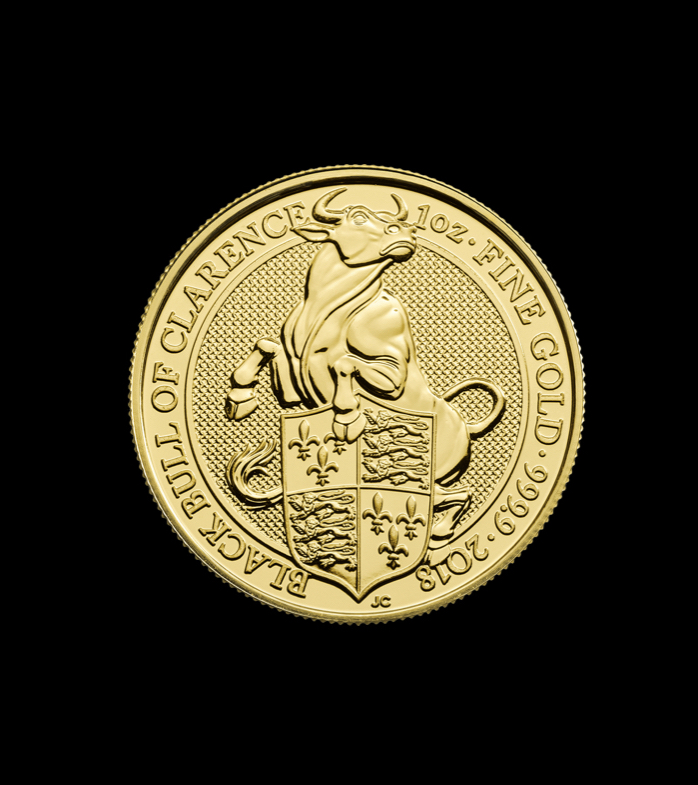
The Griffin of Edward III, Red Dragon of Wales, Unicorn of Scotland, and Black Bull of Clarence in particular built on this foundation, each combining historic accuracy with Clark’s design approach. Each beast carried its own heraldic significance, such as the Unicorn’s chained horn symbolising Scotland’s union with England, but the real challenge lay in technical execution. The Red Dragon, for instance, required painstaking individual detailing for its intricate scales, wings, and fierce expression to maintain depth and clarity at coin scale.
Production standards remained consistent throughout. Each coin is struck from 99.99% pure gold using 150-tonne hydraulic presses capable of capturing minute textures—from fur to heraldic shields. Proof versions are rhodium-plated to prevent tarnish, with hand-polished mirror fields contrasting frosted reliefs.
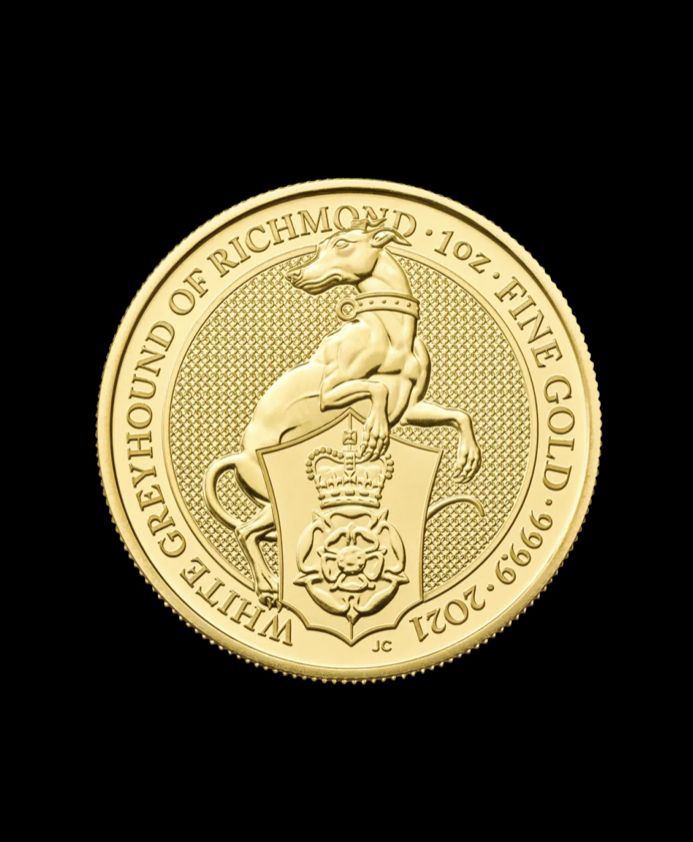
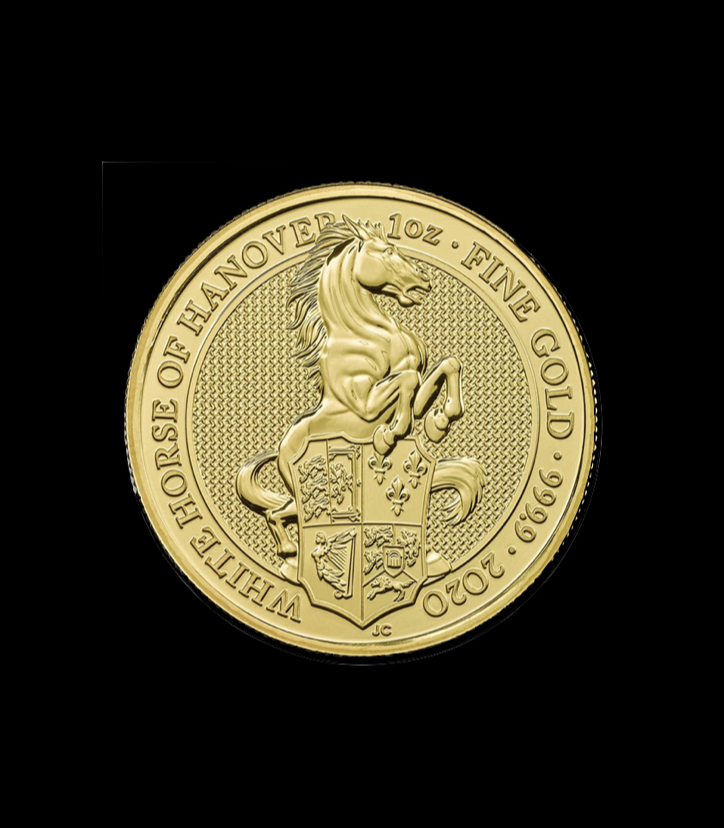
For collectors, the White Greyhound of Richmond and White Horse of Hanover proofs represent the series’ rarest acquisitions. With only 150 and 200 pieces struck respectively, these 1 oz gold proofs command significant premiums at auction. The Greyhound has fetched upwards of £3,800 ($5,000) at recent 2025 sales for pristine examples. The White Horse trades at £3,500–£4,000 ($4,600–$5,250). The Lion of England 1 oz proof, with a mintage of 450 pieces, remains a foundational piece for collectors and typically sells for £3,500–£4,000 ($4,600–$5,250).
Market Overview and Collectibility
The Queen’s Beasts coin series blends historic pedigree with precious metal fineness and numismatic distinction. Standard bullion coins trade at modest premiums of 2–5% above spot gold, with the Lion of England commanding 8–12%. UK prices for 1 oz Lions hover around £2,800–£3,000 ($3,700–$3,950) when spot gold is near £2,600 ($3,400). Smaller denominations—quarter- and half-ounce coins—offer more accessible entry points. Proof 1 oz Lions, notable for their finishes, typically command £3,500–£4,000 ($4,600–$5,250).
The Unicorn and Red Dragon designs follow closely in collecting favour. Complete ten-coin 1 oz bullion sets, originally retailing near £15,000 ($18,750), now fetch between £28,000 and £32,000 ($35,000–$40,000) secondhand. Proof sets often exceed £40,000 ($50,000), reflecting their appeal both as reliable stores of value and as cultural artefacts.
Collectors should remain vigilant against counterfeit threats. Trusted UK dealers who authenticate and certify coins provide essential peace of mind.
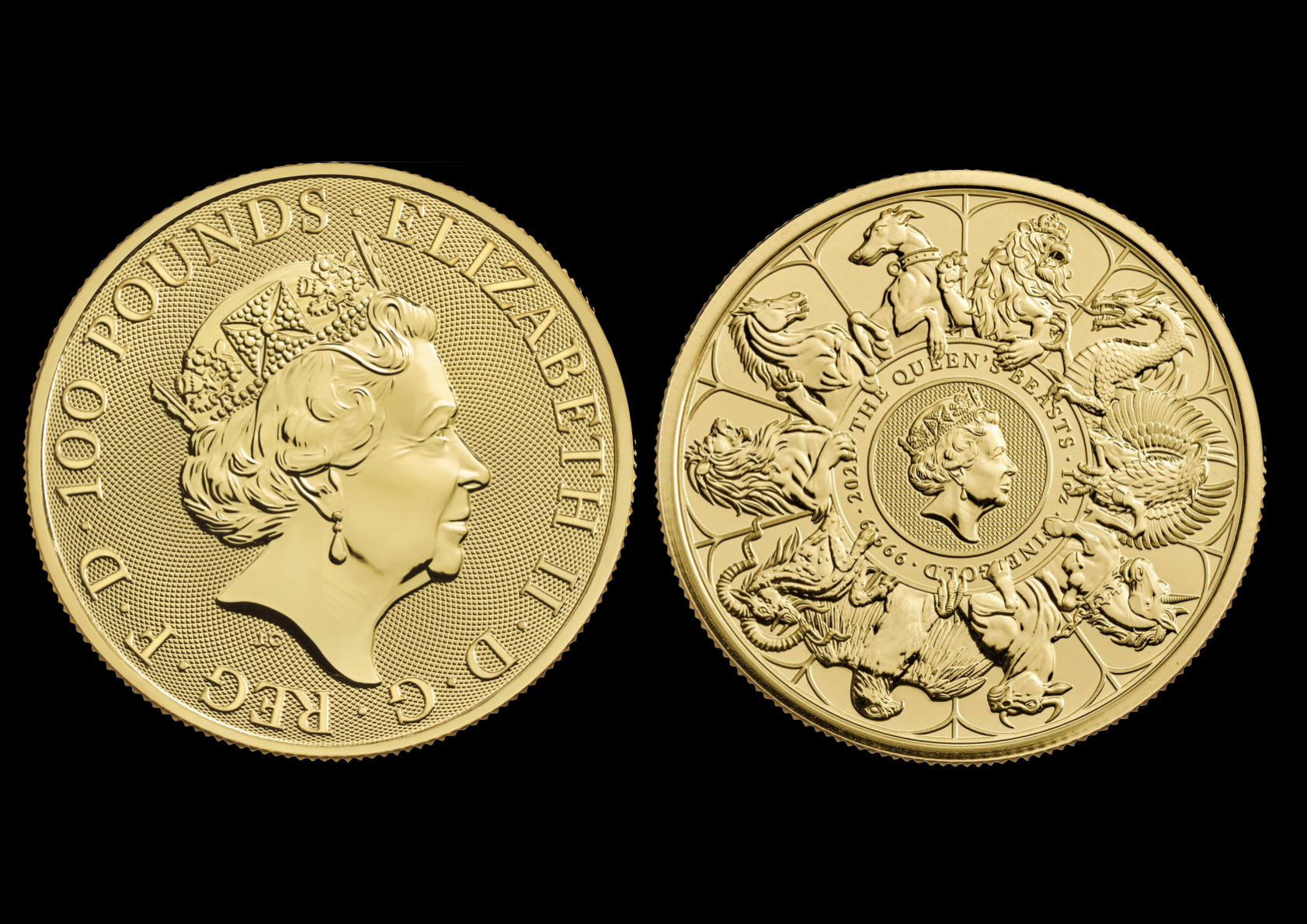
The series’ final release, the 2021 “Completer Coin,” unites all ten beasts in a single design. Its 10-kilogram gold edition, struck in fewer than ten pieces and requiring more than 400 hours of hand-finishing, represents the series’ most ambitious piece. At a 2025 London auction, a 1-kilogram proof Completer sold for £90,000 ($118,000). For collectors completing the full set, the 1 oz Completer provides a more accessible entry point at £3,200–£3,600 ($4,000–$4,500), bringing together the entire heraldic narrative in one coin.
Lasting Appeal and Legacy
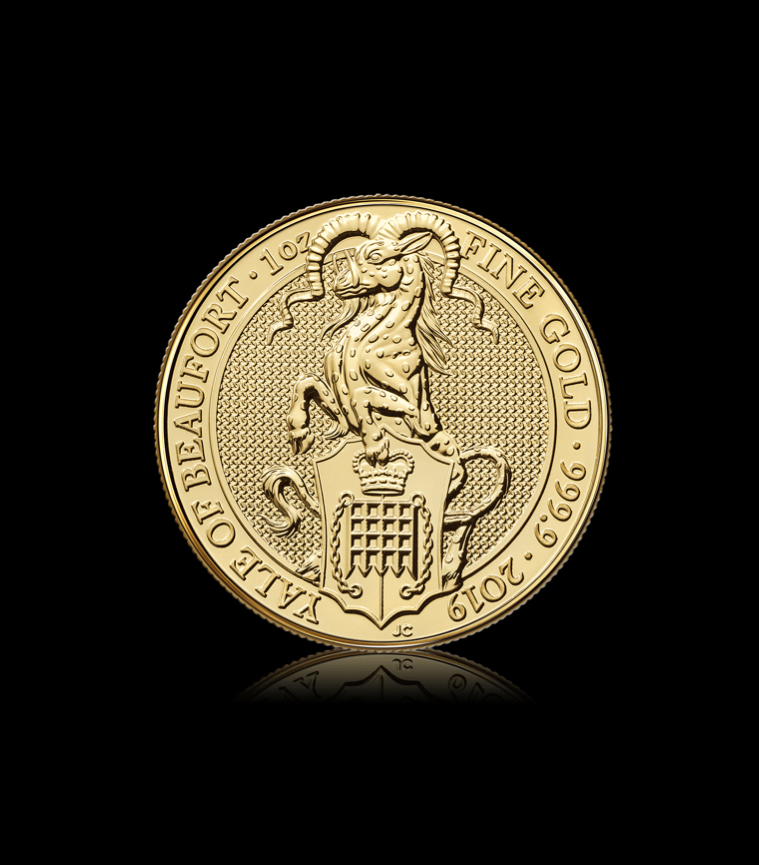
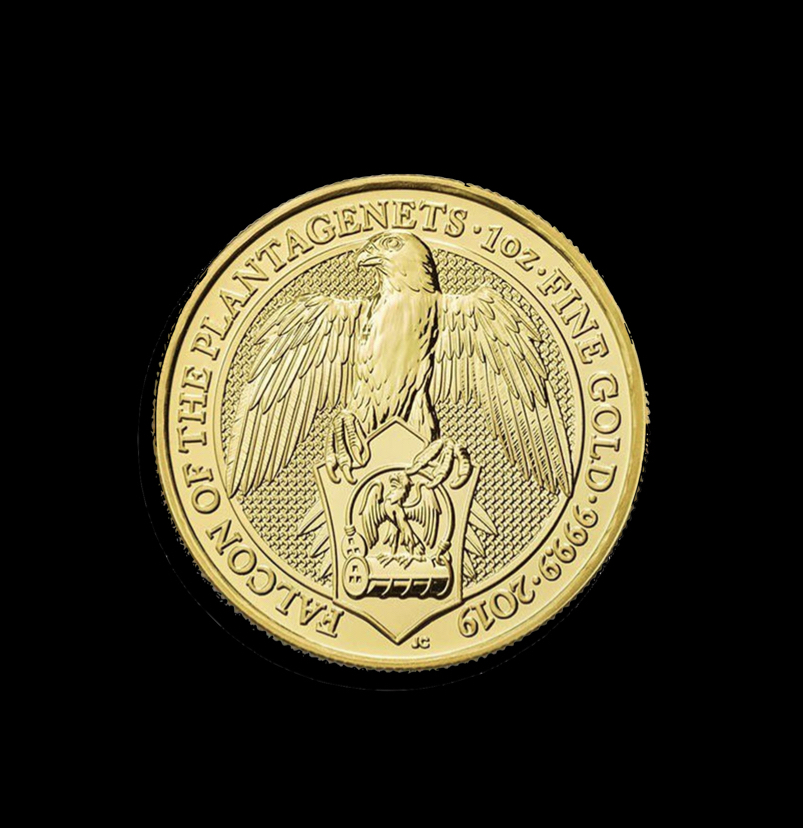
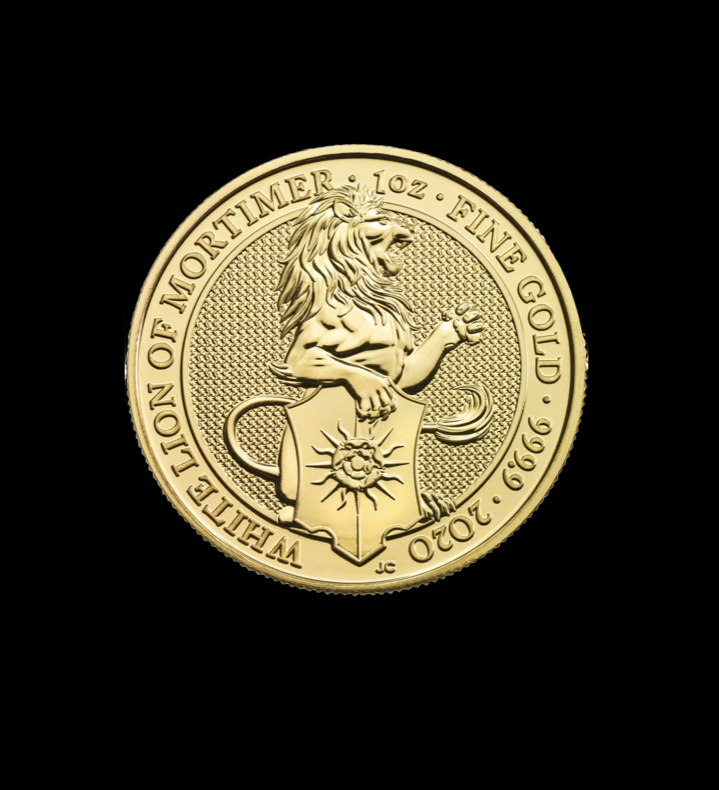
Not every beast commands equal demand. The Yale of Beaufort, Falcon of the Plantagenets, and The White Lion of Mortimer carry their own historical weight, but with higher mintages and more nuanced heraldic appeal, they are often overshadowed by the Lion’s dominance or the Unicorn’s broader recognition. Serious collectors focus on scarce proofs and recognisable designs.
The Queen’s Beasts official legal tender status affords UK collectors capital gains tax exemption. Completed in 2021, the series offers a finite set for collectors to acquire, with graded proofs commanding premiums over bullion versions. Newer releases, such as the Tudor Beasts, provide alternative collecting opportunities, but the Queen’s Beasts remain a respected reference point for British gold coinage.
Continue reading: In Conversation with Jody Clark, Designer of Elizabeth II’s Final Effigy — with reference to the Queen’s Beasts