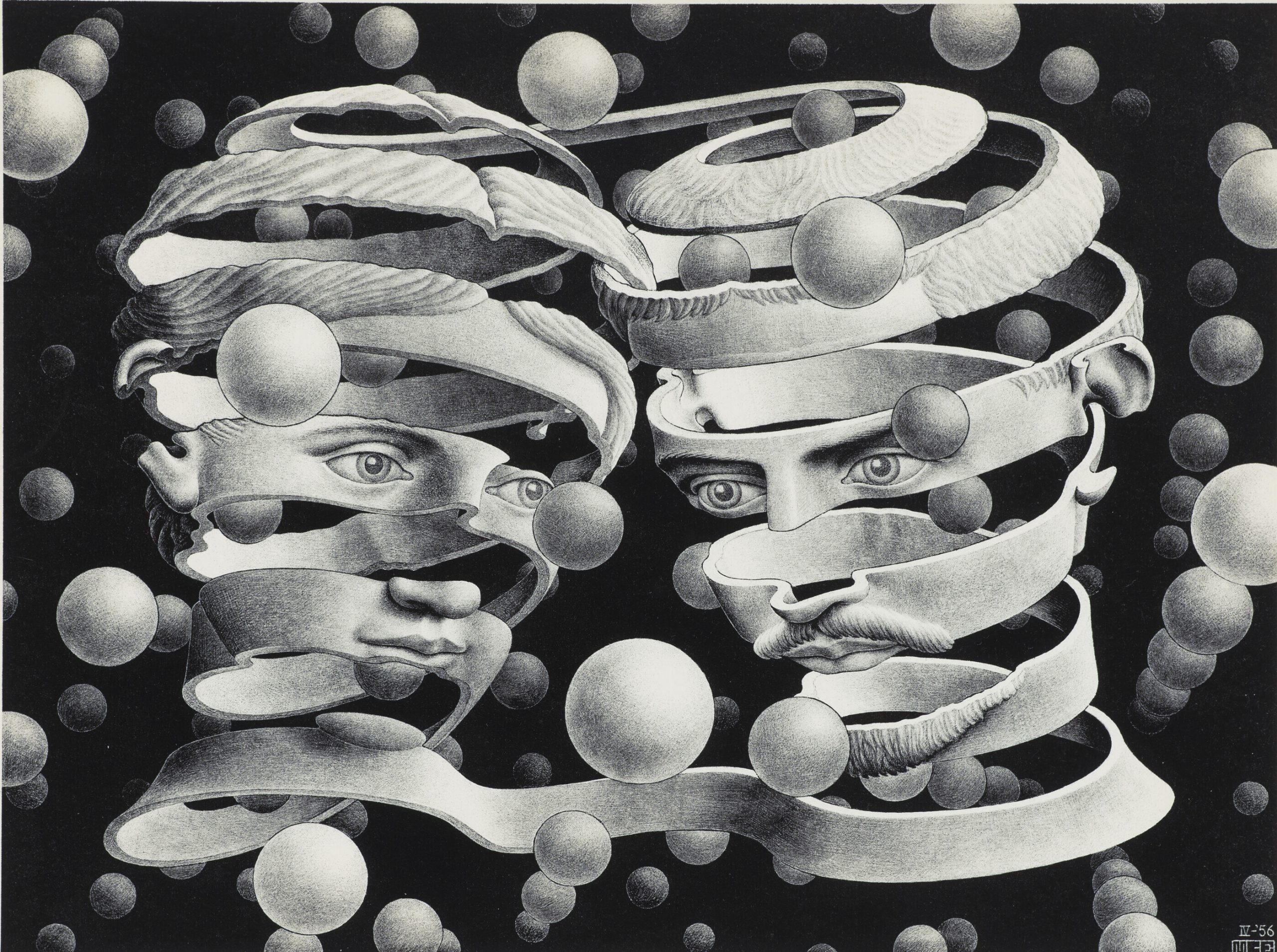
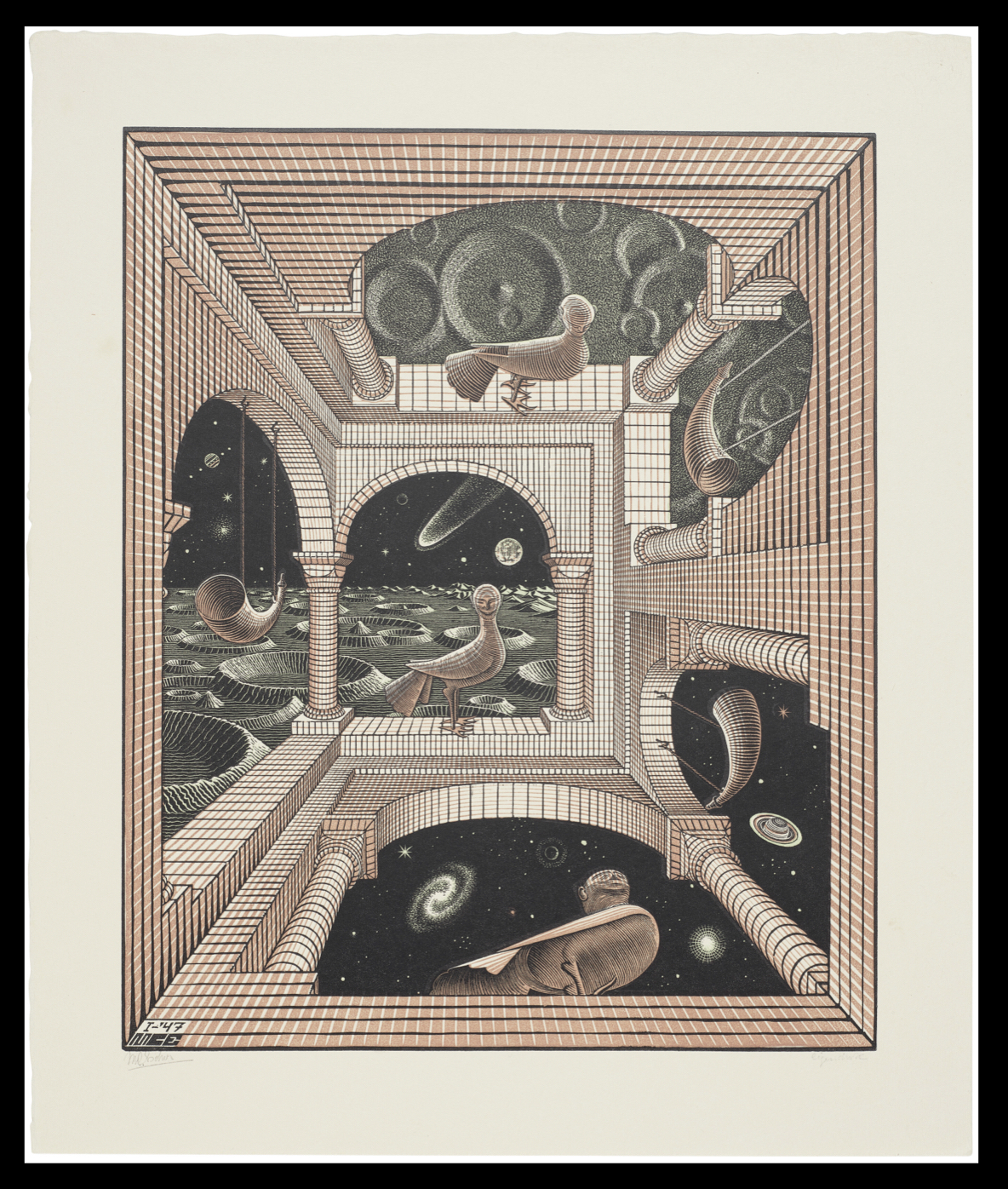
For nearly half a century, Robert Owen Lehman Jr. gathered a collection of M.C. Escher prints that the art world largely overlooked, its significance fully revealed in 2025. A scion of the Lehman Brothers dynasty, Lehman quietly amassed 58 works when Escher was a niche fascination, admired more by mathematicians than mainstream collectors. Robert Owen Lehman Jr. saw beyond the art world’s mid-20th-century focus on Abstract Expressionism, recognising the profound artistry in M.C. Escher’s mathematical precision. In July 2025, Christie’s M.C. Escher: The Art of Infinity unveiled this collection, fetching £6.24 million ($7.8 million) against estimates of £1.1 million ($1.4 million). The Lehman provenance and the auction’s mission to fund classical music drove fierce bidding, though ultimately the prices reflected Escher’s artistic merit.
The Making of a Master Collection
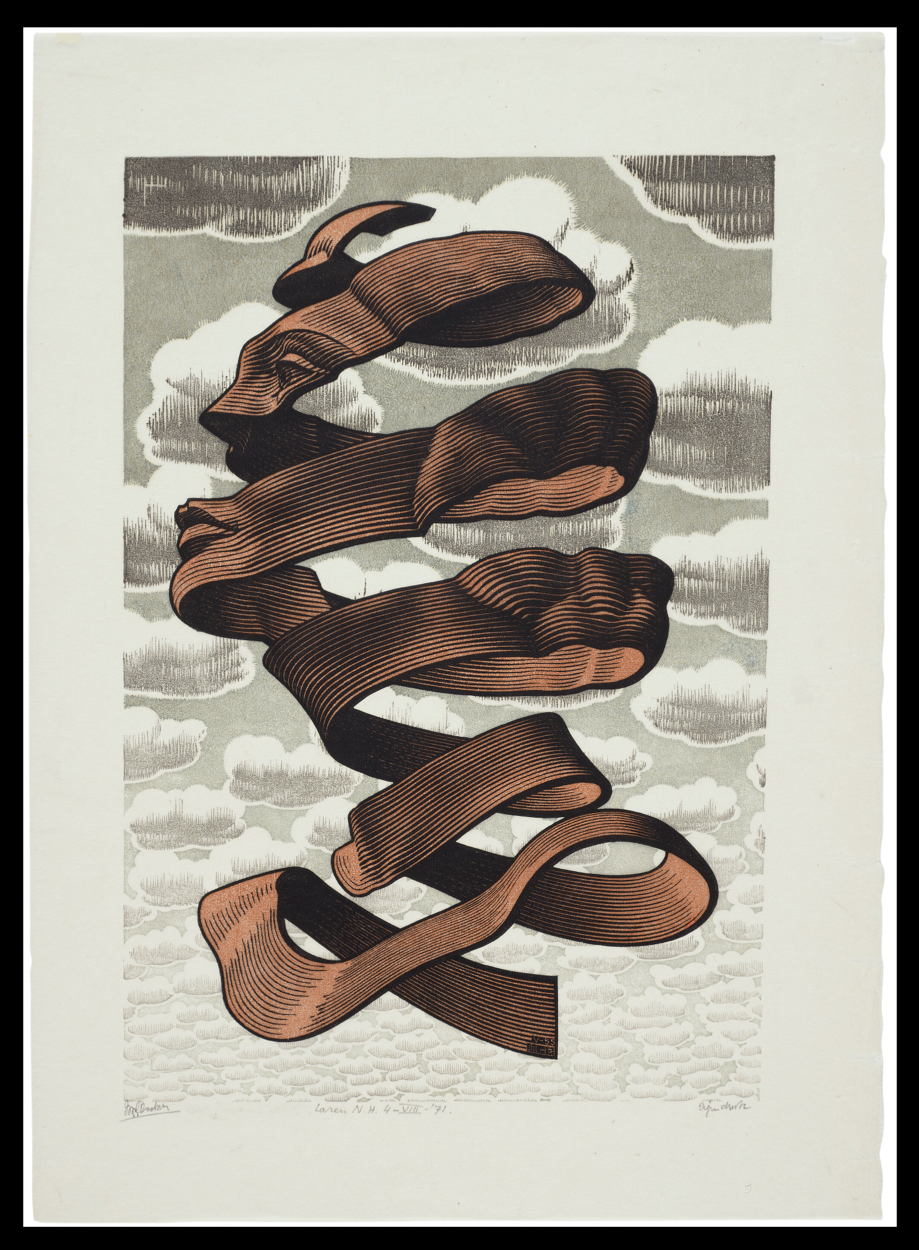
Born in 1898, Escher had initially struggled to find his artistic voice until a Spanish encounter changed everything—the Dutch artist’s journey to visual genius began with a revelation at Granada’s Alhambra, where Islamic tessellation patterns ignited his lifelong obsession with geometric transformation. Suddenly, mathematics became his muse.
Lehman understood what others missed: Escher’s prints weren’t mere curiosities but technical marvels requiring extraordinary precision. Each lithograph demanded months of mathematical calculation before the artist could begin printing. While galleries dismissed these works as illustration, Lehman pursued pristine, first-edition prints like Reptiles, Relativity, and Three Spheres II.
His scholarly approach prioritised museum-quality condition and meticulous provenance records. With only 448 lithographs, woodcuts, and mezzotints in Escher’s oeuvre—most in editions under 100—acquisitions required patience. A passionate advocate for classical music, he saw in Escher’s geometric rhythms a visual echo of Bach’s compositions, aligning his collection with his foundation’s mission.
Record-Breaking Results: July 8–22, 2025
Christie’s online sale achieved a 100% sell-through rate, soaring 467% above its low estimate. Nearly every lot (97%) exceeded high estimates, with over half reaching six figures despite only one carrying a presale estimate above $100,000.
The top performers showcased Escher’s range:
- Reptiles (1943) — $529,200 (£422,000) This lithograph demonstrates Escher’s precision as crocodiles emerge from tessellated flatland into three-dimensional reality before returning to their geometric prison. The seamless dimensional transformation required months of mathematical calculation and meticulous stone preparation.
- Relativity (1953) — $504,000 (£402,000) This staircase composition demanded extraordinary spatial planning and perspective mastery. Escher created multiple gravitational planes within a single lithographic stone.
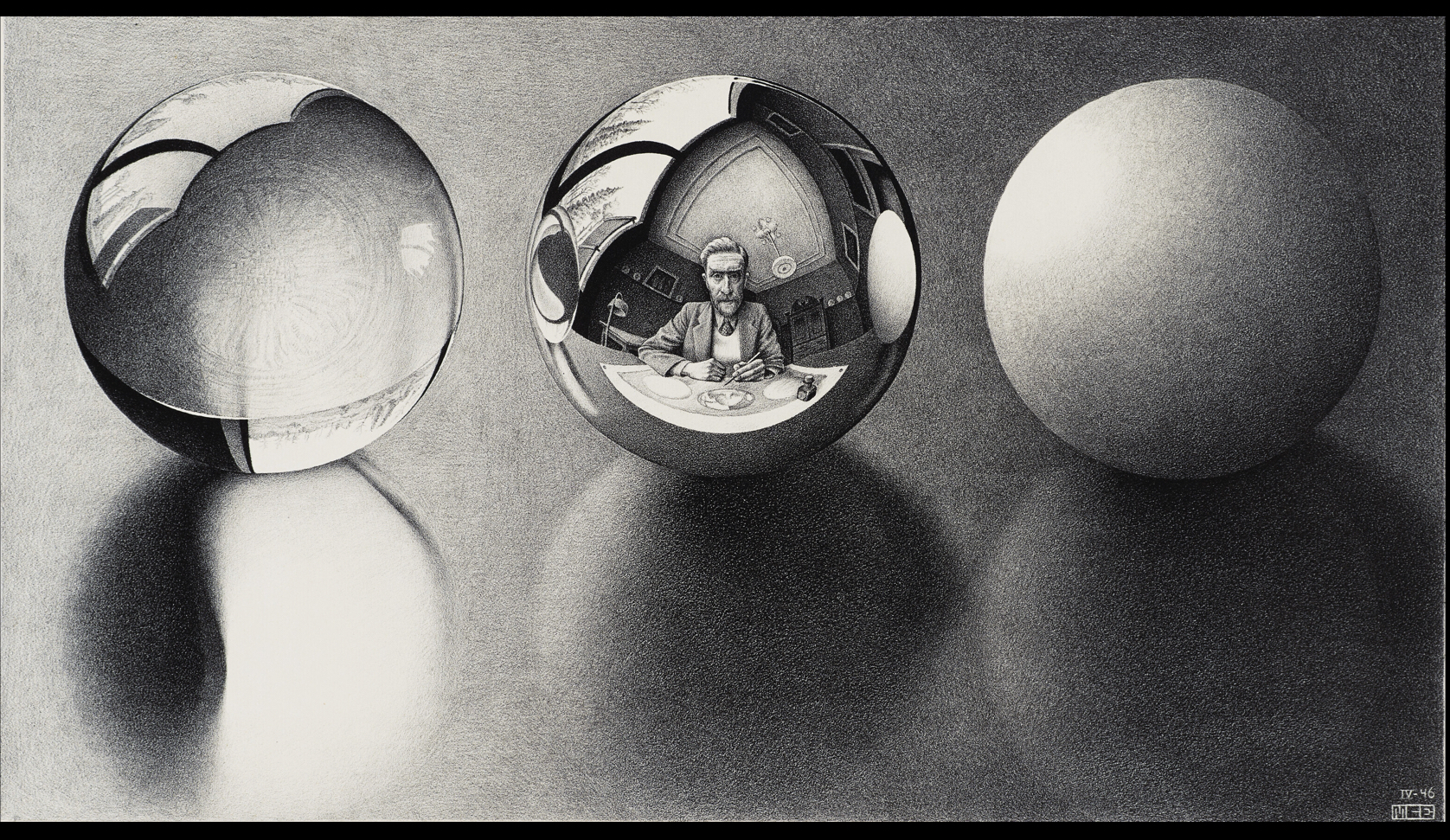
- Three Spheres II (1946) — $176,400 (£141,120) This work showcases Escher’s mastery of reflective surfaces through precise lithographic gradation. Each glass orb required different mathematical calculations to achieve convincing three-dimensional illusion whilst maintaining the artist’s self-portrait reflection.
Market Evolution
The Christie’s success caps steady growth in Escher’s market over recent years. His works have consistently set auction records in recent years, such as Reptiles at £460,290 ($569,195), Sotheby’s 2022, whilst Phillips London consistently delivers strong results for first-edition lithographs across their contemporary print auctions.
Top-quality examples continue setting benchmarks, though condition, provenance, and edition state significantly influence results. The Lehman collection’s museum-quality preservation and distinguished history contributed substantially to July’s success.
Authentication remains crucial as values rise.
Prescient Vision Validated
Robert Owen Lehman Jr.’s methodical collecting during Escher’s less commercial decades proved visionary. His approach—prioritising condition, provenance, and rarity—built a collection that became cultural legacy.
For contemporary collectors, Escher represents a rare blend of intellectual engagement and aesthetic pleasure.