
In 1952, Mercedes-Benz engineers faced a classic racing dilemma: how to fit doors on a revolutionary new chassis built for Le Mans. Their ultra-lightweight multi-tubular spaceframe was incredibly rigid, but its high side tubes ran right through where conventional doors would go—making a normal side-opening door impractical without compromising strength or adding weight. The clever fix? Doors that hinged upward from the roof, swinging open like gull wings. What started as engineering necessity became the defining icon of the 300 SL when the production version arrived in 1954.
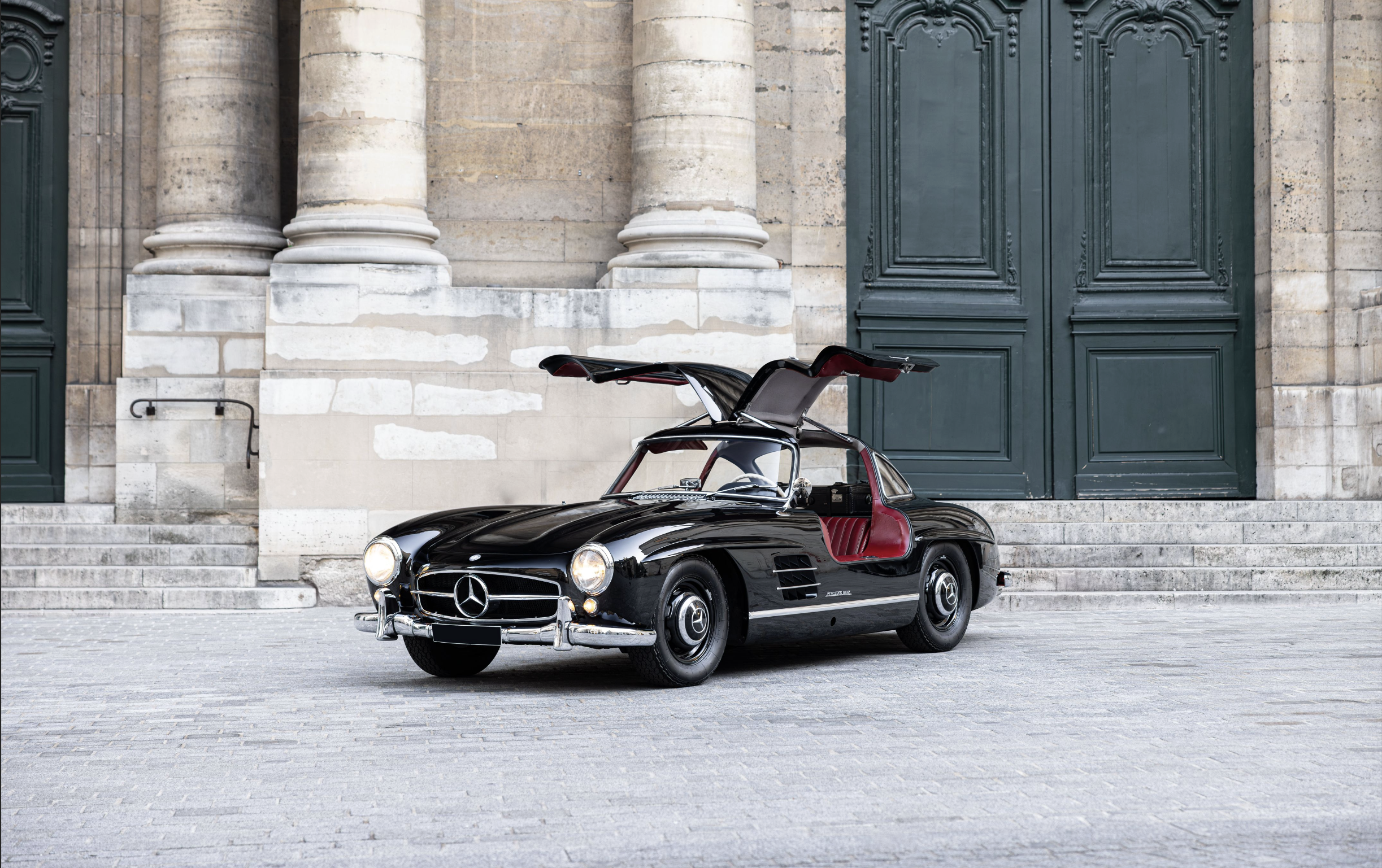

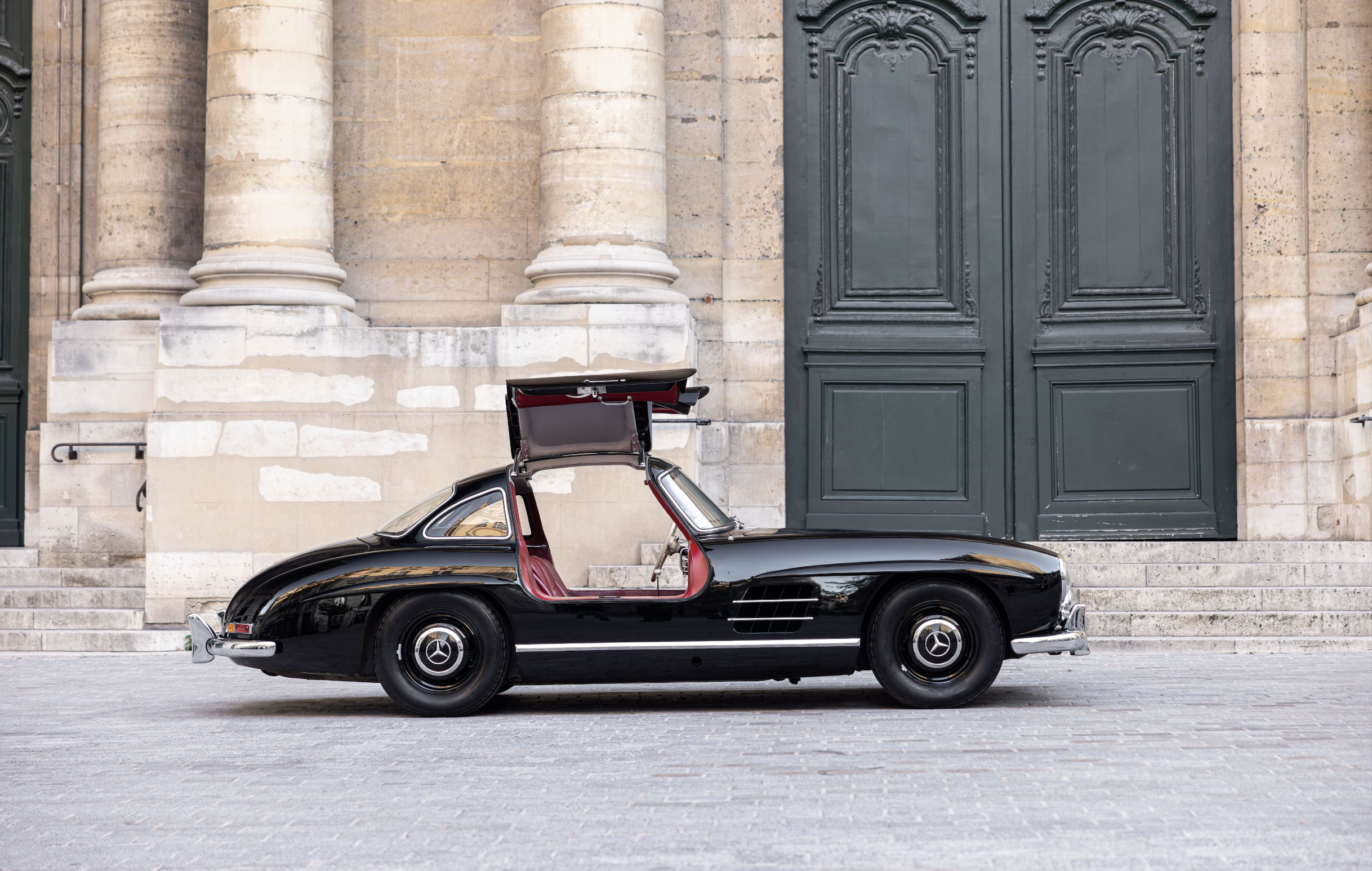
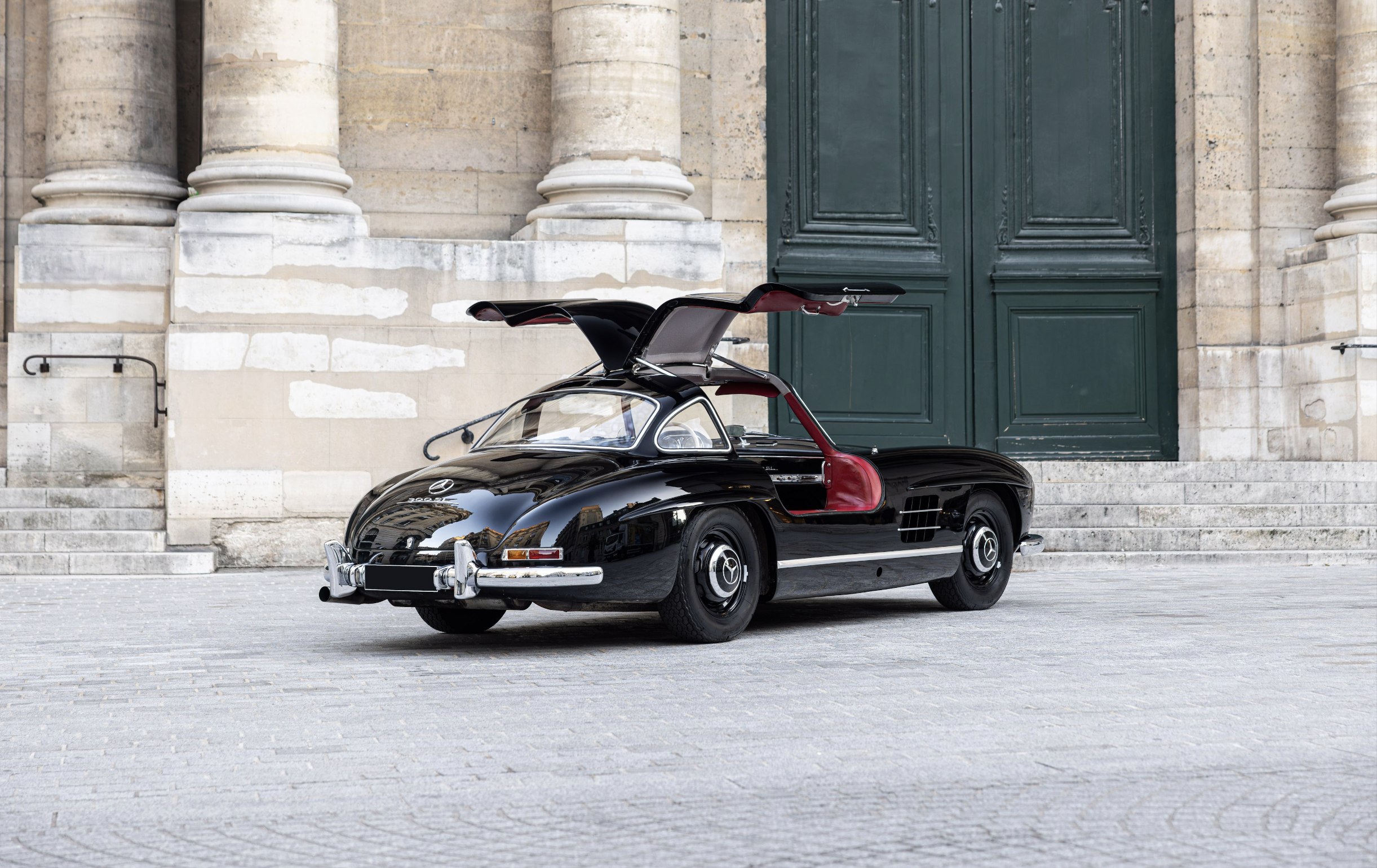
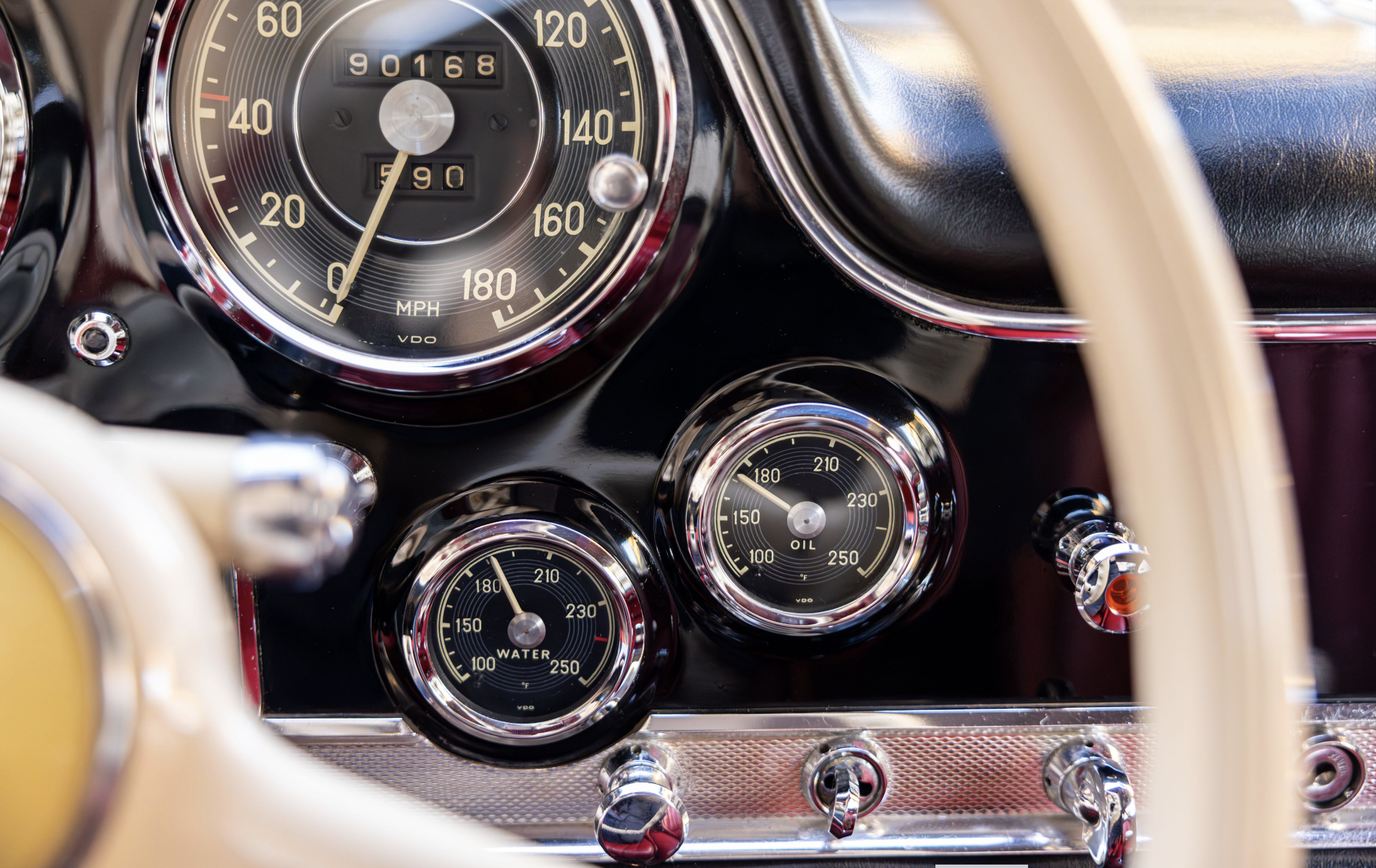
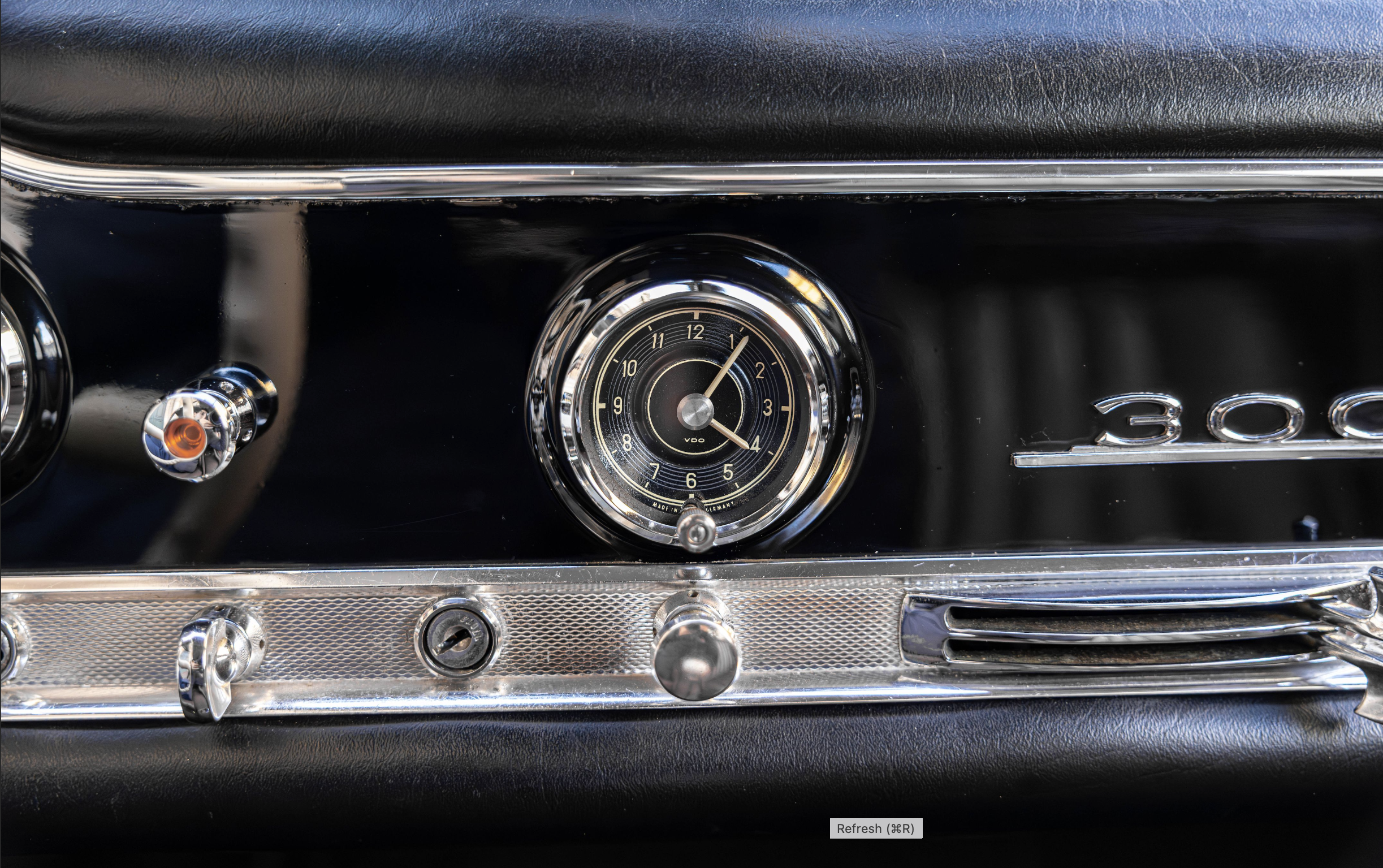
The example heading to Bonhams’ Paris sale on 30 January stands out as a particularly well-specified Gullwing. Chassis 198.040.5500614 left the factory in August 1955 with something most 300 SLs didn’t get: the optional 3.42:1 rear axle ratio. Where standard cars topped out around 140 mph, this one could actually reach the 180 mph marked on its speedometer. Estimated at €1,200,000 to €1,500,000 (£1,000,000 to £1,250,000, $1,240,000 to $1,550,000), it represents the Gullwing formula at full strength: matching numbers, documented history, and the kind of mechanical preparation that separates serious cars from expensive ornaments.

From Le Mans to the Street
Karl Kling and Hans Klenk secured victory at Le Mans 1952 in their gullwing-doored coupé, establishing the template for what followed. That success was quickly translated into production. When Mercedes-Benz offered civilians their own version two years later, they retained the aluminium-alloy bodywork and spaceframe architecture that had conquered La Sarthe.
Power was delivered by a 3.0-litre straight-six, mounted at a 45-degree angle to clear the low bonnet line and fitted with Bosch mechanical fuel injection. In the mid-1950s, this was an unconventional choice for a production road car, at a time when carburettors remained the industry norm. Mercedes-Benz’s system employed a mechanically driven plunger pump, delivering fuel according to engine speed and load with a level of consistency that carburettors struggled to achieve. The trade-off was complexity: correct calibration mattered, and long-term reliability depended on informed maintenance rather than casual adjustment.
The engine produced 215 bhp, sent through a four-speed manual gearbox to a hypoid bevel rear axle. Most customers specified the standard 3.64:1 final drive, which prioritised flexibility over outright speed and limited top end to around 140 mph. The first owner of this Bonhams example chose the optional 3.42:1 ratio instead, a less common configuration that favoured sustained high-speed running at the expense of initial acceleration.


Three Continents, Seven Decades
The first owner took delivery in New York City in August 1955 and kept the car for 25 years before it crossed to the UK in 1980. The late 1980s brought comprehensive restoration work. Two British owners maintained it before a Parisian collector acquired it in 2011, beginning its current French chapter.
The present owner approached maintenance methodically, commissioning MB Classic at Stains to rebuild the injection pump, replace injectors, overhaul the brakes, refurbish both radiators, and recondition the starter and alternator. Invoices exceeding £50,000 ($62,000) detail the extensive work performed.
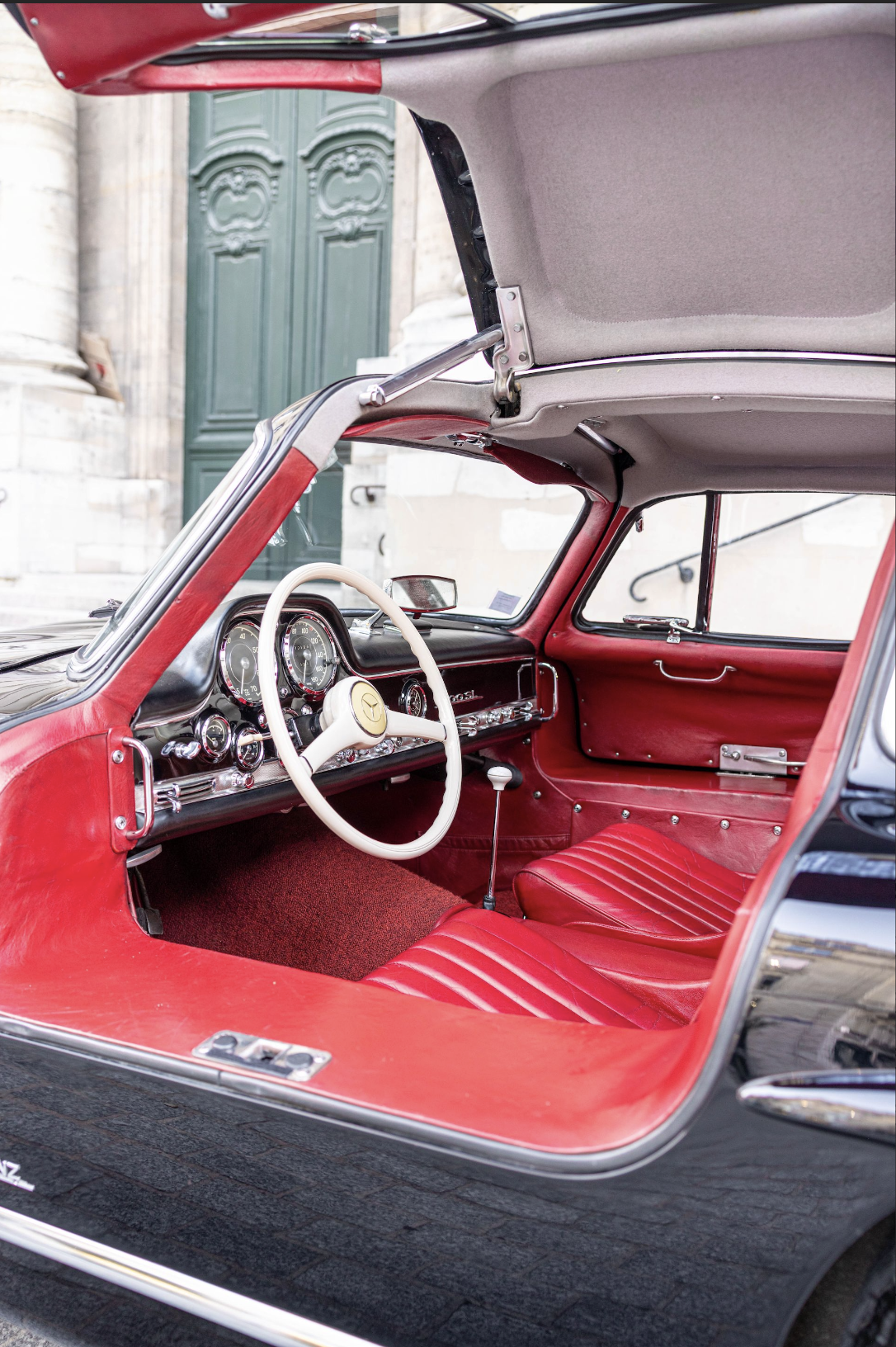
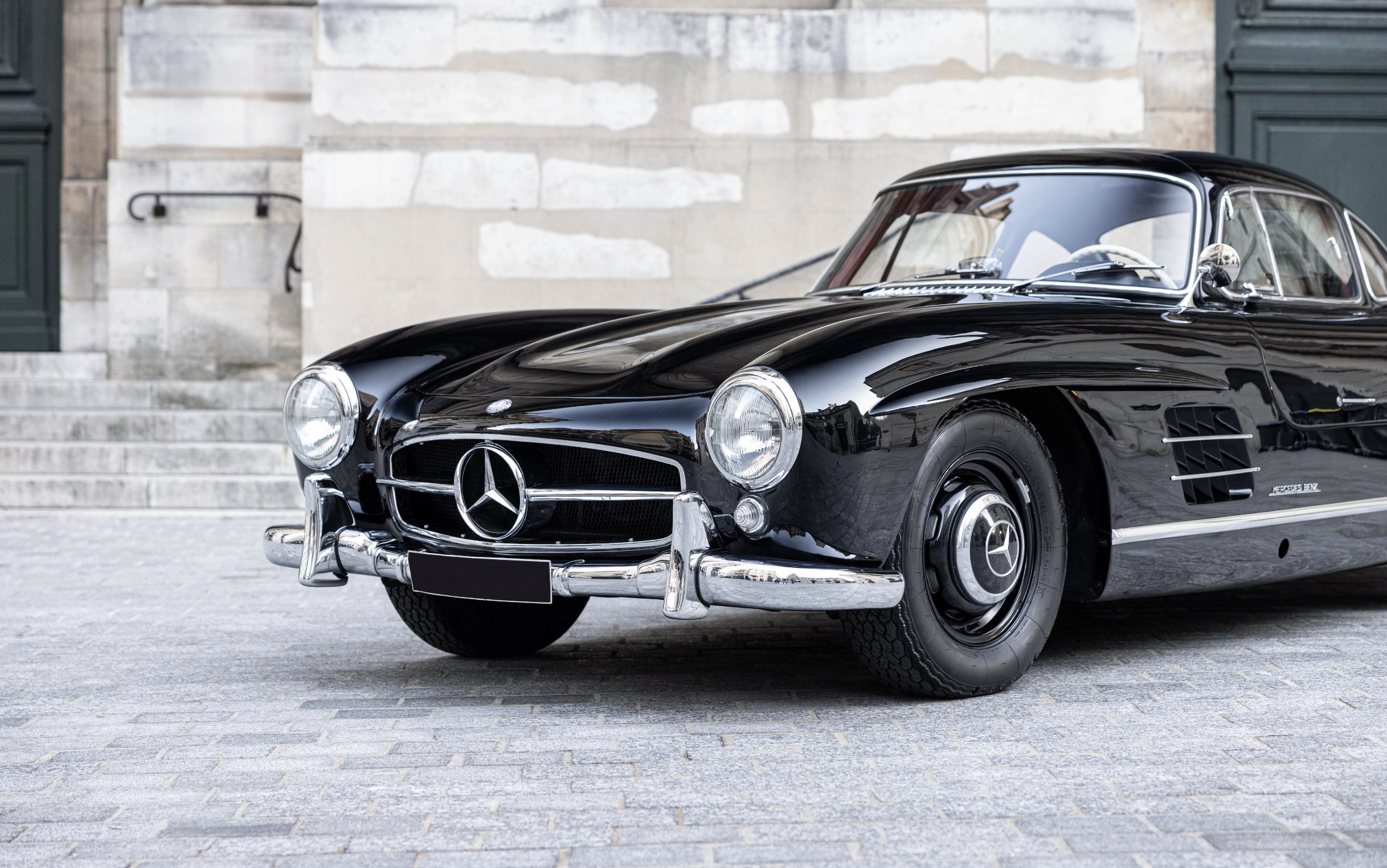
Today, the car wears black paint in place of its original Silver Grey, with red leather replacing the blue leatherette and tartan cloth interior. Most Gullwings have undergone similar transformations over six decades. What collectors scrutinise more carefully is what hasn’t changed: matching chassis, body, and engine numbers confirm fundamental authenticity. This example is recorded in Eric Le Moine’s 300 SL Register, confirming its documented history and authenticity.



Market Dynamics

Mercedes-Benz built approximately 1,400 Gullwing coupés before production ended in 1957. The roadster that followed sold in greater numbers but has never matched the coupé’s cultural weight. Recent auction results show standard steel-bodied Gullwings trading between £1,040,000 and £2,730,000 ($1,290,000 to $3,380,000), depending on condition, provenance, and originality. October 2024 saw a rare alloy-bodied example fetch £7,210,000 ($8,930,000), though that represents a different category entirely—fewer than 30 alloy cars were built.
The market has evolved markedly over the past decade. Early valuations often placed disproportionate emphasis on visual drama and the Gullwing’s distinctive doors. Today, buyers routinely engage specialist advisors, ensuring that provenance and originality are closely examined. Rising values led to a surge in restorations, some known to be substandard, driving higher premiums for cars with thoroughly documented histories.
Values for standard steel-bodied examples have eased from their 2022 peak, though cars of verified quality continue to achieve strong results. Today, condition, specification, and documented provenance are decisive, with well-maintained, correctly restored Gullwings attracting committed buyers, while those with uncertain histories garner far less interest.
Ownership costs also play a role. Maintaining a 300 SL to appropriate standards requires specialist knowledge, particularly where the mechanical fuel injection and hand-formed bodywork are concerned. Major mechanical programmes frequently exceed £50,000 ($62,000), reflecting the realities of preserving a complex mid-century performance car.
This Bonhams example sits sensibly within the established range for well-documented steel-bodied cars. Its matching chassis, engine, and body numbers confirm authenticity. A comprehensive maintenance history further underscores careful stewardship, while the Register listing provides documented provenance. Only about one in ten cars received the optional long-ratio axle, a period-specific detail that collectors value highly.



Why it Still Matters
The 300 SL emerged when racing directly shaped road car design. Track experience informed the chassis, body, and engine, producing a car that was unusually precise and technically advanced for its time. Seven decades on, a properly maintained 300 SL still delivers what Mercedes-Benz intended: genuine performance wrapped in dramatic engineering. This example—matching numbers, rare specification, comprehensively maintained—underscores why collectors remain captivated by the 300 SL.

Photo credits (right-hand side, top to bottom): ©Bonhams


