
Twenty-five cars, each requiring 160,000 individual embroidery stitches across the rear seats alone—over 700 hours of handwork before a single buyer takes delivery. Priced at £2.4 million ($3 million), the Phantom Centenary Private Collection marks the final V12-powered flagship from Rolls-Royce, a century after Henry Royce sketched the original 1925 model.

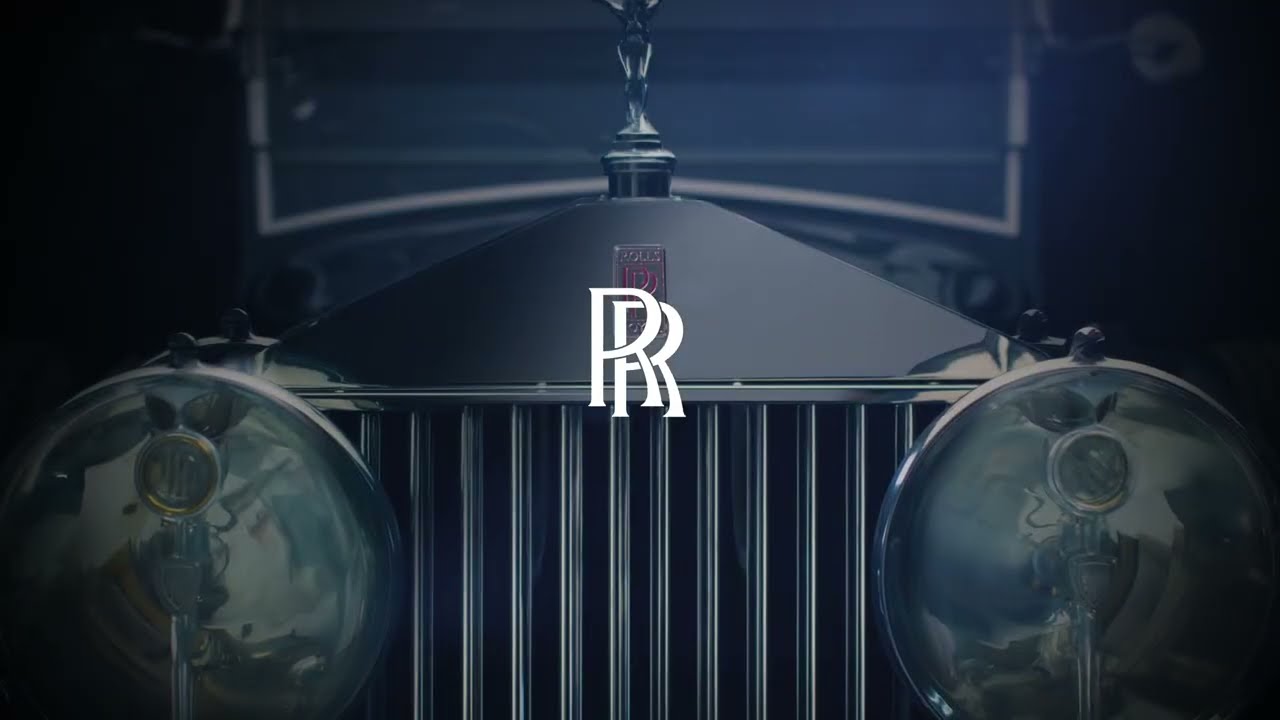
When Engineering Became Architecture
Royce’s 1925 Phantom replaced the Silver Ghost with an inline-six designed for silence above all else. Early owners didn’t buy complete cars—they commissioned bare chassis, then engaged coachbuilders like Mulliner and Hooper to craft bodies reflecting personal taste. By the 1930s, Rolls-Royce introduced a V12 with aluminium cylinder heads, a material choice that balanced weight against thermal efficiency long before such decisions became fashionable.
The Centenary rides on the aluminium spaceframe architecture shared only with the Cullinan and Ghost. Its 6.75-litre V12 produces 563 horsepower and 900 Nm of torque—figures that matter less than how they’re delivered. Double-wishbone front suspension works with a multi-link rear arrangement. Electronic systems read road surfaces ahead and adjust damping before imperfections reach the cabin. The result isn’t sportiness. It’s the absence of mechanical intrusion, a quality Rolls-Royce has refined across ten decades.


Inside, designers consulted 77 archival drawings and period ledgers to inform every bespoke element. The rear seat fabric displays high-resolution images of the Conduit Street showroom and Royce’s original artwork, overlaid with those 160,000 embroidered stitches.


Front seats feature laser-etched leather marked with drawings from both the 1925 launch and the 2003 relaunch—a visual timeline spanning the model’s lifespan. Between them sits the ‘Anthology Gallery’: 50 brushed aluminium sheets shaped like book pages, each engraved with historic press coverage dating back a century.


Door panels showcase some of the marque’s most complex wood marquetry to date. Three-dimensional inlay combines with layered ink and 24-carat gold leaf to depict significant Phantom journeys throughout history. The two-tone paintwork recalls early models but finishes with a new super champagne crystal overpaint—crushed glass particles that shift as light angles change. Even the Spirit of Ecstasy mascot nods backwards: cast in 18-carat gold and plated in 24-carat gold, it replicates the proportions of the 1925 original. Wheel centres bear 25 finely engraved lines, one for each car in the collection.


What Rarity Actually Costs
Standard Phantoms begin around £517,000 ($650,000). The Centenary costs nearly five times that figure, a premium explained by exclusivity and its position as the final V12-powered Phantom. Limited production runs have historically traded above launch prices, particularly when tied to significant anniversaries or mechanical milestones—factors the Centenary combines.
Demand remains concentrated among buyers over 50 who view such acquisitions as multi-generational assets rather than depreciating transport. Annual servicing will likely exceed £20,000, reflecting the complexity of maintaining gold leaf, bespoke leather, and a hand-built twelve-cylinder engine. Recent economic pressures have affected the broader luxury car market, yet Phantoms—particularly limited editions—have shown resilience. Whether the Centenary appreciates depends partly on how future buyers value internal combustion finality in an electrified age.
Authenticity risks are minimal when buying directly from Rolls-Royce, though the secondary market for limited editions can present provenance challenges. Buyers should verify complete service histories and original specification sheets. The 25-unit production run makes counterfeiting impractical, but verifying originality of gold-plated components and numbered wheel centres remains prudent.

The Final Expression of an Icon
Rolls-Royce has committed to full electrification by 2030, with electric Phantoms already in development. The Centenary Collection represents the final expression of an engineering philosophy that defined the nameplate since Royce’s first sketches. No subsequent Phantom will carry a V12, and these twenty-five cars mark the end of that particular lineage.

Continue Reading on Rolls-Royce: Rolls-Royce Spectre | Rolls-Royce Project Nightingale


